Search the Community
Showing results for tags 'carène'.
-
I thought it would be interesting to write up a little comparison between six pens. To wit: the Lamy 2000, the Waterman Carene, the Parker 51, the Wing Sung 601, the Parker 75, and the Pilot VP. Why these six particularly? Well, it seems a frequent question many ask is “What is the best daily writer?” We could ask this question as well with a slant toward office tasks, notes in lectures, etc. I also think many of us fantasize about having one trusty “daily carry” fountain pen that can do pretty much everything, from filling out forms, writing letters, or penning the next great work of literature. There are thousands of different models of fountain pens from dozens of manufacturers to choose from, and many of us enjoy more than one. That being said, it’s an undeniable reality that with the pace of modern life (or, we might say, the pace demanded of us all thanks to our ballpoint-wielding brethren) many of the pens we love are perhaps a bit too fussy for daily writing tasks. Maybe they’re too delicate, or too expensive, or too slow to deploy when you need to get that idea or contact info down NOW, or just prone to drama, either in the form of hard starting, drying out, skipping and railroading, burping ink, or not having the most practical filling system. Therefore when someone says “I love fountain pens and I want to use one on an everyday basis, actually outside my own four walls,” there are a few pens commonly recommended for the job. The Lamy 2000 and Parker 51 probably are recommended most frequently, as being classic/timeless, business-appropriate, designs which are known for their workhorse prowess. The Pilot Vanishing Point is also frequently recommended due to its innovative retractable system, making it very fast to use. The Carene is a bit of a dark horse, but has been called with some justification a “French Lamy 2000,” the Wing Sung is often suggested as a product-improved Parker 51 clone, and the Parker 75, while not often thrown into these discussions, probably should be because it’s a great pen with a lot of the same virtues. There are certainly other common recommendations too, or pens I have left off. I know that at least one person will tell me their antique Duofold or Waterman 52 has never skipped a beat, or they would never dream of leaving their front door without their Visconti Homo Sapiens. Pelikans and Montblancs are popular choices but I find both lacking in one way or another as pens to carry around and write spontaneously with. I’ll expand on this a bit: most of us probably want the feel of a quality writing instrument. A platinum preppy may get the job done but it’s not really going to scratch the itch, at least for me. But I also hesitate to take a resin pen out that cost hundreds, because this pen WILL be used a bit harder than a desk pen, and scratches and scuffs might make us sad. For that matter, ANY pen that costs “a lot” is one to think twice about before tossing in a backpack to face the vicissitudes of daily abuse. The price comfort level will be different for everyone but I think most of us could agree that there’s a lot of great options under about $300, and over that point we might think twice about if we really want to risk dropping, theft, ham-handed colleagues, etc. I personally quite like the Pelikan line, and I like their screw caps -which are pretty quick to deploy because they usually thread on in less than one full rotation, but that unscrewing virtue is also a vice, and the internet abounds with tales of lost or broken pens, and ruined clothes. A good desk pen if you like them, but I can’t say it’s the perfect workhorse. As for Montblanc? Very similar. A good pen, and tailor-made to ride in your suit jacket’s breast pocket and sign a document every so often, but mine dries out easily if I’m using it while conducting an interview, so I can’t say they’re the best design for this particular task. It’s very annoying to write a sentence, and in a couple of minutes go to write something else and the pen requires effort, a scribble, or extra pressure to make it write again, with the alternative to be constantly capping and uncapping. The pens chosen for this roundup are therefore mostly hooded nibs, and all have snap caps or some other quick-deploy feature instead of threads. They come from the U.S., Germany, Japan, France, and China. Another factor to keep in mind with an everyday pen is the filling system. Every single type has pluses and minuses, but I don’t worry overmuch about that dreaded question of “what do I do if I run out of ink?” If I’ve got one pen on me I can easily have two. I can even have one that’s full for no other purpose than as a spare for some hypothetical gargantuan writing session. I keep a bottle of ink and a box of Kleenexes on my desk at work, and at home there is no shortage. In an absolute worst case scenario I can snag the cheap ballpoint someone left on the table… so I don’t feel a daily writer needs Japanese eyedropper-level capacity. But some capacity or versatility is good because, again, we’re talking use under sometimes less than perfect circumstances, not the pen spa in the home office. I’d advise everyone to actually get to know a pen before they start carrying it so they have an idea of its ink capacity and how often they may need to refill. I myself do like Extra Fine pens too, which means my pens will write a lot longer than the same pen fitted with a broad nib. Relevant information because if you like broad nibs you may prioritize capacity much more than I do. Ok on to the pens. The Parker 51. Some say this is the best pen ever made. It writes the first time, every time. It does not dry out when left uncapped for a time, and is a timeless, classic, understated design, which has a bit of retro-futuristic post-deco flair. The cap feels like a quality affair and posts well, while not impacting the pen’s excellent balance and versatile size. If I can sum this pen up in a nutshell, it’s a wonderful workhorse pen that does have a real vintage feel -because this is a vintage pen. The lucite body is unusually tough and not prone to cracking, chipping, or serious scratching, but it feels …like a plastic pen. Combine that with light weight and a nib that’s almost invisible, and you get a pen that while ticking almost all the boxes on paper, is frankly kinda boring. On the other hand, they do write sweetly. It’s the kind of thing you only notice after trying a lot of other pens. If this is your first or, especially, second fountain pen, you would be forgiven for finding this pen terminally uninteresting. Additionally, the filling system is a blessing and a curse. This pen is available with two systems. The later and more common aerometric filler is easy to fill, and the pli-glass sacs are pretty much bulletproof, making this the one vintage pen you can count on to write well with minimal restoration. The older vacumatic pens will probably require a trip to the repairman to get them running. They’re prone to drying out if left unused for days or weeks, and also difficult to flush and change inks, difficult to tell how much ink you got when filling, and difficult to see how much ink you have left. That said, there’s a reason that they took the pen world by storm in the 1940s and continue to be a recommended choice today. This is an “advanced” choice. Probably not a good starter pen but in a few years you’ll probably have one and enjoy it. Not a good choice if you like to change inks and colors either. Buy a bottle of some staid and businesslike blue, black, blue-black, or similar, and dedicate it to your pen. The Wing Sung 601 is a similar pen, with the advantage of having a more interesting vacuum filling system, having an ink window to give you an idea when you’ll be pushing empty, and being available new, for slightly under $20. The downside is that the plastic is said to be prone to cracking, but there’s a steel version available too. My Parker 51s are as a whole more pleasant to write with (nib feel on paper) because the Wing Sungs aren’t totally consistent. I have one that’s sublime, one that’s pretty nice, and a few that are average; overall the Wing Sungs aren’t bad. Mine in extra fine produce some of the prettiest writing of any of my pens. (I can’t argue with the results!)The cap clips are cheap and easily bent, which is annoying on a pen of any price, but overall this pen is hard to argue with. I’d suggest trying one as a prelude to see if you like the feel, before stepping up to the vintage ‘51. I will say that one of my Wing Sungs managed to fill its cap with ink 20 minutes before an extremely important meeting once, which did not endear it to me that day. I’ve heard that my lack of finesse with the filling might have caused this so it’s possible it’s operator error, but it’s hard to completely trust the pen after an incident like that. On the other hand I’ve had one inked up for months untouched (I have several of these) and I just tried it. It wrote perfectly. The next pen in our list is the Parker 75. I don’t often see this pen recommended but took the liberty of throwing it in because it’s got a similar cap to the venerable Parker 51, making it a very easy choice if you need a pen to write something quickly. It’s got the Parker 51’s love-or-hate aerometric filling system, along with the option to take a cartridge, and I think piston and slide converters are around too, which does add some extra versatility. My Parker 75 writes a wet medium, and has never displayed any hard-starting shenanigans. I did leave it uncapped for 10 minutes to test it and there was only a slight hesitancy which made the first stroke of my first capital a bit faint. The nib also has a much more interesting feel to me than the glassier nibs of the Parker 51 and Wing Sung, inviting me to grab this one instead if I want to enjoy my daily writing even more. Because the nib is open and not hooded, there’s more potential to easily tune it to your preferences, and nib units are available if you want to go down that route. The triangular section (slight but it’s there) is pleasant for me -but maybe not for you- and is also a bit on the smaller side, and I also enjoy this pen’s ability to rotate the nib so the writing experience can be further tuned to your preferences. And let’s not forget the iconic styling, most frequently seen in a solid sterling silver body with a crosshatch pattern. This pen is available used at non-exorbitant prices and isn’t a bad option. The real question is if your hand gets along with the section. If so, a very decent and underrated pen for daily use. It feels luxurious and high quality, but only you know if your fingers will like it. The Pilot VP is an odd duck. Actually designed (at least in terms of the mechanism) contemporaneously with the Parker 75, this pen looks and feels like a fancy ballpoint, complete with a big clicky button on the back. Click the button (which does have a nice feeling if you like such things… I’m indifferent personally) and a tiny nib emerges from an ingenious trapdoor hidden in the nose. This pen is bulbous, has a weird clip coming down the pen from the nosecap (so you can clip it to your shirt and still keep the nib safely vertical) and has a brass body, which makes the pen weightier than you might expect. It’s a recipe for either love or hatred. I personally love it. I’m one of those lucky ones who can grab this pen and write with no ergonomic issues whatsoever, and in fact I find the pen utterly comfortable for pages and pages. (This might actually be the most comfortable pen I own. Seriously.) The nib on this one is also a delight, and has a great feel (for me.) I own around 50 pens and this nib, to me, is in the top 5. Highly subjective I know, but it’s great. The downside of this pen is it’s limited capacity. It can take a cartridge or use Pilot’s small piston converter, or pilot’s larger aerometric converter. I usually opt for the aerometric one, myself. My pen is finished in black carbonesque paint, which is an interesting finish. This pen mostly lives a pampered existence but I have to assume that it might chip if the pen were carried a lot outside of a case. This is a pen I might seriously consider buying in an upgraded finish -a bonus is that it’s one of a very few Japanese pens with interchangeable nib units, so you can replace the body, nib, or both, or try different widths. There’s no cap to worry about, and if the feel in hand works for you, this pen is a wonder. It is prone to dry out if left untouched for weeks which means this pen needs to be used like it was designed for. Another bonus here is that you can get functionally identical copies from Majohn and Jinhao for $20-30, making it easy to see if the design works with your fingers. The Waterman Carene is a bit of a departure from the previous pens. It’s a much more modern design, cartridge converter (standard piston type) and has a gorgeous inlaid nib. This pen is a looker, and with its fancy lacquer finishes, striking nib, svelte shape, and extra touches like the spring loaded clip, this pen definitely adds an element of extra refinement to your writing. It’s a very pretty pen, and writes …ok. For me, this pen in M is so utterly smooth on paper, that it’s numb, or kind of “dead” feeling. The F version, on the other hand has not just a little but substantial feedback, making it a chore to write with for paragraphs. I also find I have to consciously grip the pen just a little higher than I normally might instinctively do, and my medium nib still feels a bit clunky. It will do the job, and the cap pulls off and pops on with a strong click, bordering on a snap, but overall writing with this pen just feels like work to me. Added to this feeling is the fact that while the cap will post, others have said that you probably don’t want to do this because the pen body can be scratched. Now I have to find somewhere to set that delicate cap before I write. The cartridge/converter filling system is unusually finicky too. The feed holds a ton of ink which is great for capacity and general performance, but getting a fill can be tricky, and some people have trouble with inky fingers, either from filling or from fingers sliding down onto the nib when writing. Finally, newer Waterman converters don’t last, most other converters don’t fit… leaving you potentially sourcing “vintage” converters for a pen that’s still sold new! This is a pen I want to like but just haven’t warmed up to. It sounds good on paper but it’s fussy. Last we come to the Lamy 2000. If the last pen was a polished Frenchman, this is a direct and to-the-point German. Or, put another way, if Grand Moff Tarkin from Star Wars were shopping for a fountain pen, this is the one he would choose. I wanted to dislike this pen, because my personal aesthetic preferences are far closer to 18th century Baroque than they are to 20th century Bauhaus design. I avoided trying, let alone buying one for years on principle. But let me tell you, this pen is amazing. It’s probably the most practical, well-designed and functional pen out there. For everyday purposes, it has a few virtues that specifically commend it. Every time I uncap this pen, it writes, and its cap is easy to pull off, easy to snap on (with a nice click, too) and readily posts. The spring loaded clip will hold to just about anything, and the makrolon body and texture make for a durable, grippable pen that is robust, doesn’t readily show scratches, and feels very nice. This pen is a piston filler with a very generous ink capacity. Frankly the pen is also a bargain compared to others of its class (gold nib piston fillers), and though its looks are polarizing (they’re growing on me) the overall vibe is subdued and businesslike, which means this pen doesn’t scream “look at me guys, I’m using a fountain pen!” which can sometimes be a desirable trait in professional settings. It’s got a subtle window allowing you to check the ink level, too. Downsides, in addition to the polarizing looks, are the smooth, tapered section and its two tiny “wings” for securing the cap, which protrude in a very low-key but readily feel-able way, meaning some complain that their fingers slide toward the nib and others complain that they feel the cap wings as they grip the pen. Personally, I don’t mind either feature and even appreciate the wings to help me grip and index the pen in my fingers, but this is definitely personal preference. Also, this pen writes very well for me, BUT it’s an “EF” that’s actually a M, maybe even a B, so depending on your preferences finding a nib size that suits you might be difficult. Now, how do these writing instruments compare? For quick access the Pilot VP wins. That button makes the pen instantly available. The Parker 51, Parker 75, Wing Sung 601, and Lamy 2000 tie for a close second, and the Waterman Carene is in third -its cap requires more force. These caps pull off easily enough, and can be retained in the off hand, set on the table, or posted. For subtlety of deployment… I think the Parker 51, 75, Wing Sung and Lamy 2000 all tie for first, the Pilot VP takes second, and the Carene, again, brings up third. The Carene cap makes a louder sound, doesn’t want to stay on when posted (which is maybe questionable anyway) making you deal with the cap in some way… The Pilot is clicky and loud. Nobody will notice the first or second time but in a meeting it can get a little annoying for some of your neighbors. The other caps are silent or subdued and can be equally silently posted if you wish. Visually it’s all about your personal preference. The Carene looks very luxurious with its mottled lacquer (or solid color and contrasting silver cap.) The Lamy is subdued but a piece of modern art. The VP is subdued (but a little wacky when you really look at it.) The Parker 75 exudes class and refinement. The Parker 51 is vintage (with an aura of authenticity if you or your neighbor examines the pen. They’re 50+ years old and don’t seem like copies.) The Wing Sung seems vintage and the details are a little bit cheap. But it looks classy and businesslike nevertheless. Personally I’m going to say the Parker 75 is the clear winner here, but this category is entirely up to you. Writing prowess is tough too because it is so important but can be subjective, boiling down to nib and grip preferences, weight preferences, etc. For me, the pens rank: Parker 51, VP, Lamy, Wing Sung, Parker 75, Carene. But it may be completely different for you. Capacity and filling: I’m going to give the Lamy top marks here for its cavernous piston filler and ink window. The Wing Sung scores second: the modernized vacumatic mechanism is fun and holds a lot of ink, and there’s a window to check it. The Parker 51 is third. The Aerometric units are easy, seem to hold a decent amount of ink. The vacumatic units are fun and also hold a decent amount. Next is the Parker 75. It uses slightly less readily available Parker converters and cartridges but works well and this does make switching inks easier (not a huge priority for me for an everyday workhorse pen.) The VP is easy but capacity is limited and this is a pen that readily dries out if neglected, and the filling system can get cruddy too. Finally the Carene comes in last, because the converters are proprietary-ish, difficult to find, and the section is so cavernous that it holds nearly a cartridge worth of ink on its own, making filling fiddly. Reliability, ie does the pen always write and does it do so in a predictable way, is very important when out and about. The Wing Sung 601 and Lamy 2000 get top marks here. These pens have never failed to work for me. The Wing Sung and Lamy have been inked for months and write every time, even when untouched for a long while. They put down the same amount of ink and it never looks oxidized or discolored. The Parker 51 gets 2nd place. It is very reliable but may dry out if left inked and not touched for months. The Parker 75 comes in third. My medium can be a bit inconsistent… writing wetter as the pen warms up. My accountant nib (xxf) is incredibly consistent though. I’ve had hard starting from the VP depending on my ink choice, and woe betide thee if its been a little while since you used the pen. It probably will work… but it may not, or may require a line of doodling, reverse writing, pressing a bit, wiping the nib with a towelette, or other tricks to coax the nib into life. My Carene has been known to skip, and dry out a bit, and although mine have never given me any ink trouble, they have a reputation for inky fingers, and my friend’s Carene routinely floods its cap. Durability is last mentioned here but may be the most important consideration. I’m going to give top marks to the Parker 51. The lucite plastic is still tough and vibrant, if you get a scratch (you probably won’t) it will just blend in with the pen’s existing patina. Nothing generally goes wrong with these pens. The Wing Sung is in 2nd. Plastic is softer and the clips are easily bent. But the pen is pretty tough and if you should have a tragic accident, you’re out $20…. Which is a very liberating thing. The Lamy 2000 gets 3rd place. It’s got a textured finish which obscures normal scratches and marks, and the makrolon material is fairly durable in its own right and feels solid. Anecdotally though, these pens can break in two at the area where the section and ink window join the body. Not incredibly likely but maybe if you sit on the pen in your back pocket or dump a few textbooks on top of it in your bag, it could happen. It’s said to be more likely if you’re in the habit of completely disassembling the pen for cleaning. The Parker 75 gets 4th. Still a durable pen but dropping one can put unsightly dings in the top or bottom tassies, the open nib is also pretty thin and would not be at all resilient to a drop of any sort, and the plastic threads holding the section to the barrel can apparently sometimes strip out. But the prevailing cisele finish is robust and not easily dented, and a mark would probably add character. The VP and Carene come in last. These pens have painted brass bodies, and they can and do scratch or chip. I treat my pens carefully and haven’t had issues, but this isn’t a desirable trait in a pen that’s getting carried around from room to room in a workplace or school. The VP is at least one piece, but the Carene’s posting issues make it very likely that regular daily use will see scratches develop. Also, metal pens tend to hit harder when they take a tumble onto a tile floor. Maybe that’s not true in terms of physics strictly speaking, but my experience is, heavy metal pens will dent themselves not infrequently, while the plastic one will probably be unscathed or maybe a mild scratch. We all prize different things in a pen. I went into this comparison thinking to myself that the Waterman might well win, at least for me, because on paper it seems like a prettier Lamy 2000. My conclusion after spending about 6 months getting to know, and using all the pens mentioned in this review, is that the Lamy is a way better pen than I thought (but I just don’t use it much due to a nib that’s more broad than I typically need.) And I don’t have to fret about whether I should get the nib ground (spoiler, I did and it’s still too broad) or cultivate a taste for Modernist design to appreciate the Lamy, because…. on a daily, real world basis, the Parker 51 is just as good, actually a bit better. (For my fingers, the Lamy section is nice for a page, the Parker, many pages.) And I have one with a nib that is superlative. The pen cost me $10 (and another $65 to have the Vacumatic system restored.) Any one of these pens could be a good fit for you depending on your particular needs and environment. I’d particularly recommend the Parker 51 (main annoyance is no ink window but my solution is a second pen inked in same color), Lamy 2000 (main annoyance is nib width…. And looks.) Beyond those two, pick up a Wing Sung 601 and a Majohn A1 or Jinhao 10 because, for the price, you owe it to yourself to try them, you won’t cry too much if they’re lost, either. Frankly, my Majohn writes nearly identically to my VP (and nib units are interchangeable) so I’d rather scratch up the $20 pen than the $200 one. The Parker 75 is a good pen and has some hidden virtues. I’d be hesitant to recommend it as a daily pen without trying it out first though. But if you find it comfortable and it’s got a nib you like, it could be a very good daily pen. And the Carene? Well, I wanted to like it but for me this pen is very overrated. It’s not a bad fountain pen in itself, if I didn’t have at least 20 in my collection that are better, including all the other ones in this review.
-

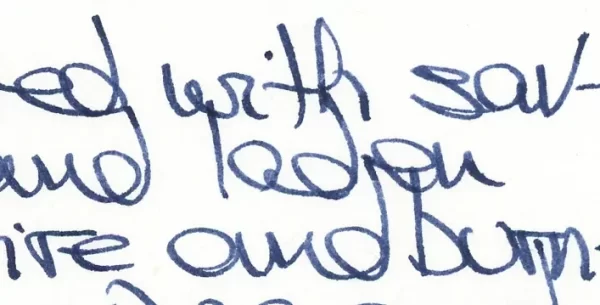
Sandy1 review Pelikan 4001 Blue-black - hi-res Carène on Royal 25pc rag.webp
Mercian posted a gallery image in FPN Image Albums
From the album: Sandy1
Sandy1’s hi-res image of Pelikan 4001 Blue-black, written on Royal 25% rag paper, with her Waterman Carène.© Sandy1
- 0 B
- x
-
A. Not a problem? B. Big no no? C. Why can't you leave well enough alone? I don't currently have any problem with my 3 Carène, I'm thinking of using an ultrasonic cleaner with more troublesome pens that are hard to disassemble, or I just don't know how to like the Parker 105; but it would be nice to know if it would damage the Carène with its inlaid (and glued?) nib. Same question for Geha Goldschwinge, with the diference that they seem way more fragile than Carènes... But one of them would probably really benefit since even Rapido Eze can't get it to write with the right flow...
-
Hi, First time poster and I am in need of help and experience. Unfortunately my Waterman Carene Fountain Pen has suffered the same fate as Balenemate's pen. His link is here from June 13. https://www.fountainpennetwork.com/forum/index.php/topic/247665-broken-carene-nib/ I've added pictures below: The crack is around the entire circumference of the Pen grip. I believe that the Fountain Pen lid itself is defective and must have some how damaged the pen Anyone with experience of this problem? Will Waterman replace the entire pen under warrant? Rather than attempt a repair? Thanks Tom

-
Adding a mate to my Carene Marine Amber, today I received the Carene L’Essence de Bleu. It has a lovely dark blue lacquer barrel with palladium plated cap with wave pattern, palladium trim, and Rhodium plated 18k gold nib. Out of the box, the fine nib wrote perfectly. I find it a sleek and elegant pen comfortable to hold and write with. I’m altogether pleased with it, as I have been with the Amber version. From Waterman’s website: https://www.waterman.com/pens/l’essence-du-bleu/carène-fountain-pen-lessence-du-bleu-gift-box/SP_2170968.html
-
Adding a mate to my Carene Marine Amber, today I received the Carene L’Essence de Bleu. It has a lovely dark blue lacquer barrel with palladium plated cap with wave pattern, palladium trim, and Rhodium plated 18k gold nib. Out of the box, the fine nib wrote perfectly. I find it a sleek and elegant pen comfortable to hold and write with. I’m altogether pleased with it, as I have been with the Amber version. From Waterman’s website: https://www.waterman.com/pens/l’essence-du-bleu/carène-fountain-pen-lessence-du-bleu-gift-box/SP_2170968.html
-
I have a waterman carene rollerball pen. I wonder if I can convert the Rollerball pen into a fountain pen. Think about how I was the messages before the search and modification. Are you sure that the Carene fountain pen cap fits the Carene roller ballpen cap? Wouldn't it be compatible if I put the carne fountain pen cap in the rollerball pen barrel and put a very small cartridge about 3.7cm sold by Waterman into the rollerball barrel?
-
Hello friends! 👋 So very recently I picked up a Waterman Carene medium nib, which is a gorgeous pen and for the most part I am pretty happy with it! However I have observed some strange behaviour from it when using on different paper types. From what I have seen, the Carene seems to have various reports / reviews of skipping or hard starting being an issue. I observed this when writing on some Clairfontaine paper in a notebook, the page started looking quite messy with missing parts of letters or me having to write over existing letters to fill them in. I then tried the exact same pen with the same ink(Edelstein Aventurine) not 5 minutes later on some Tomoe River paper in another notebook and I experienced not a single skip nor any hard start when writing for roughly the same amount of time. Is this something others have experienced and is it an actual problem with the pen or with the paper? Tomoe River and Clairfontaine is pretty good quality paper I am to understand, so I am curioius as to what others think. Does this pen need the touch of a nibmeister and if so, who could people recommend for such a service?
-

Is There A Site That Lists The Waterman Pen Models And Production Years
Gutbucketeer posted a topic in Waterman
Does anyone know of a site that lists the difference Waterman Pen models and their years of production? I'm particularly interested in the pens since the 1980s such as the Phileas, Kultur, Laureat, Expert (I,II,III), Carene, Hemisphere, etc. I can't seem to find a good source for when the regular Phileas started and ended production versus when the Kultur started and ended production. Their are also others that are more rare like the Maestro and the Master that sometimes get confused with the Laureat. Thanks Jim Bunch -
My favorite fountain pens are Waterman Carene (medium) and Sailor Pro Gear (broad). I find my Pineider Avatar (medium) and Estie (medium and broad) fountain pens to be pretty/beautiful but not exceptional writers. I enjoy the metal weight/solidity of the Carene and love the lines laid down by my two Watermans (both mediums) and my Sailors (Pro Gear and 1911). Are steel nibs by nature boring (will the Diplomat nib be the same Jowo as my Estie?) or will a Diplomat Excellence nib be both smooth and have character? Would a Diplomat Excellence (Evergreen with broad steel nib) be a good choice for me? Something else? I grew up with Parker but in recent years have expanded and would be grateful for guidance. I joined today because participants are so insightful and generous with their knowledge.
-

First Gold Nib Pen - The Lifelong Workhorse
shadrickjr posted a topic in Fountain & Dip Pens - First Stop
Ok, here we go....I am looking to purchase my first, and last, gold nib pen. The last pen that I will ever use. This pen will be my workhorse pen, as I will use it for journaling, I might even keep it in my pocket throughout the day. I'm looking to spend under or around $200. These are the pens that I would like to pick from: 1.) Waterman Carene 2.) Pilot Custom Heritage 91 3.) Karas Kustoms Ink (all copper) 4.) Pilot Namiki Falcon I would like to note that I'm NOT interested in any piston fillers, as I would prefer a pen that uses cartridges and converters. I enjoy carrying extra supplies and the rare instances in which I actually have to go to my Altoids can and grab my backup ink. I'm looking for a smooth nib, and I plan to write with a Fine or Fine-Medium nib. Here are a list of some of the pens that I currently own, that are decent writers to me: - Pilot Metro (Fine nib, Section is a little too thin) - Parker Urban 2016 model (current workhorse) (Medium nib) - Jinhao 911 - Jinhao 8802 (Pocket Carry) - Hero 901 - Parker Urban 2012 model (Medium Nib) (a little dry/resistant writer, but it feels nice in my hand) For some reason, I'm leaning mostly towards the Carene and the CH91. Has anyone had any issues out of the pens listed? Which one would be best for all-around heavy use? Thanks! -
Hey all, the cap band separated from the cap on my Carene so the cap is no longer held in place. Customer service invited me to send it to France for repair, but in procrastinated and decided I can just glue it back into place. It would take quite a while for me to get the pen back and it is one of my favorites. I doubt I will ever sell it, so Im not too worried about ruining its value. I am worried about ruining its aesthetic. Will a drop of super glue handle this? 2 ton epoxy? Marine epoxy? What would you use? Thanks
-
Hi folks, I am thinking of buying myself a present (ok, I'll be honest - I mean that I wants a new Shiny Thing I does, oh yes!), and I would like some advice from you before I Succumb to the Temptation to blow what is actually rather lot of money for me. I am trying to choose between a current production (2019-2020) Parker Sonnet, and a Waterman Carène. I am (as long as the Mods are happy to let me) putting this thread in to both the Parker forum and the Waterman forum, so that I can get as many well-informed replies as possible. The Carène that I fancy the look of is (happily for me) the cheapest one available, and so it is ‘only’ the same price as a Sonnet with a gold nib. The retailer from whom I am thinking of buying my new toy sells both pens, and in every nib width too They also stock spare nibs, so I could buy any colour of Sonnet and also buy a gold nib to put in to it. Background I already own some Parker Frontiers, so I know that the size and shape of the Sonnet suits my hand (although I don't yet know about the weight). I also like that their nib units can be unscrewed if necessary, because I like to use Rohrer & Klingner's iron-gall inks „Salix” and „Scabiosa”. The ease of removing the Sonnet's nib & feed for cleaning reassures me that I would have less to fear in terms of the consequences of letting any ink dry out in a Sonnet. [i did once let some „Salix” dry-out in a Parker "51", and that was a massive PITA to put right. It took about six weeks! OK, so it has so far only happened on the one occasion, when my mother had to be rushed in to hopsital with acute neurological side-effects from a new heart medication, and was in there for a month. Happily, it hasn't happened since, but since then ease of cleaning is something that I do consider whenever I contemplate a new pen purchase.] Regardless of my penchant for ‘planning for failure’, I am concerned that I have seen many complaints about Sonnets drying-out whilst capped, and complaints of them ‘writing dry’. Neither of those things sounds like anything I want - especially as I like pens that ‘write wet’. So, have you found modern Sonnets to have a drying-out problem? Do you think that there is any point in my buying a Sonnet with a gold nib, or are the steel nibs just as good? Is the gold nib more ‘springy’ than the steel? Are both nibs ‘nails’? With respect to the Carène, I like the look of the beast, and have read many complimetary things about it on here. I have read the advice on how to avoid the problems that can occur when filling it, and how to adjust the rotation angle of the barrel so that the ‘stern’ end of the pen is oriented correctly when the barrel is screwed back on. I have not yet held an example of the pen, so intend to try one out so that I can check its girth, heft, and balance before I buy it. My potential worry with it would be its large and inaccessible feed - if I were to let an ink (but especially an iron-gall ink) dry out in that I expect that it would be a nightmare to clean out. Possibly even worse than the "51"! What are your thoughts, oh Fount of All Wisdom that is FPN? Which of these two pens would you advise me to buy? Do you think that the Carène is the better pen, and that I should buy the Carène and just leave the iron-gall inks for my Frontiers? Or that each pen is as good as the other? Or that the Sonnet is better, and that I should buy one with a gold-nib? Or that I ought to buy a steel-nibbed Sonnet & also some nice inks with the rest of the money? Are there any other ‘problems’ with either pen? Have you found either to have any ‘idiosyncrasies’ that have irked you? My thanks to you all in advance for your answers. Cheers, M.
-
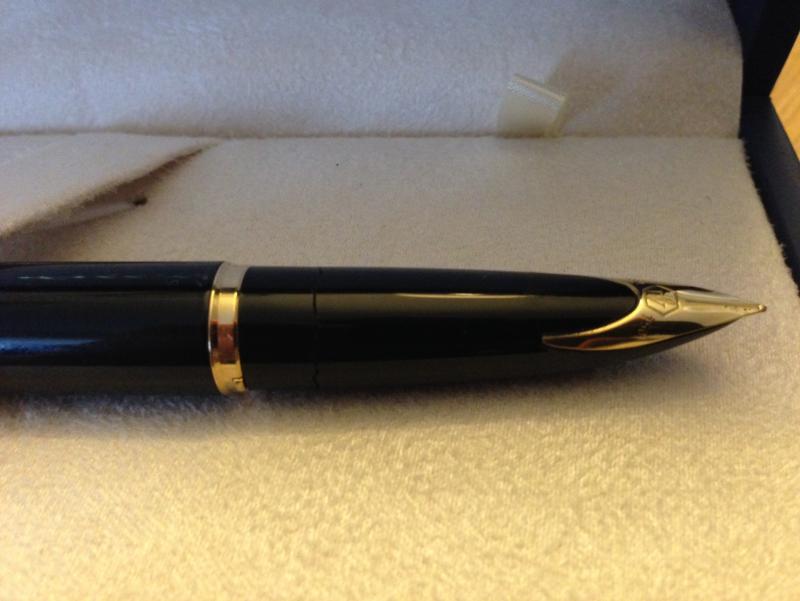
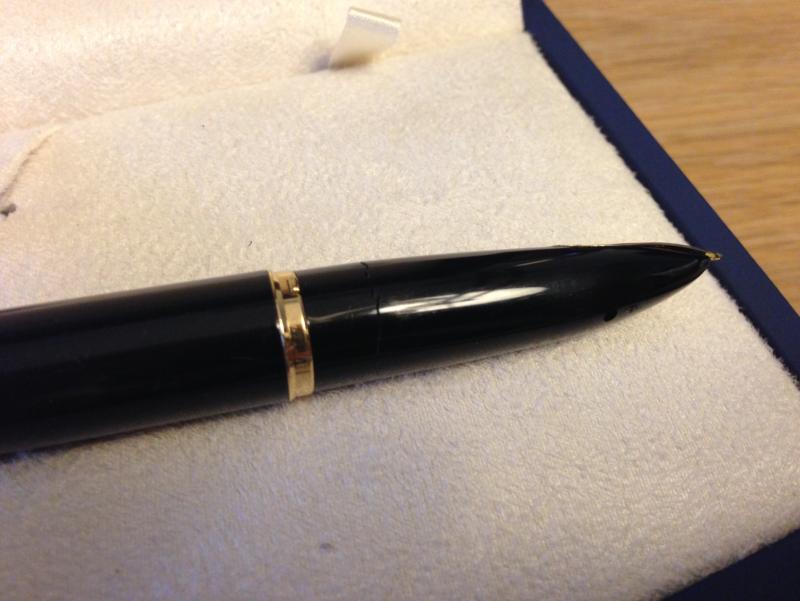
Hey, Just ordered my first Waterman pen today. A Waterman Carène Essential Silver, I had my eye on one for a while now... and I saw it had been discontinued meanwhile/recently. So I quickly went to find one somewhere. I ordered one with a fine nib because I read the medium is quite broad. I ordered a bottle of Serenity Blue with it. Looking forward to writing with it.
-
I find myself in the unusual situation of having received an Amazon (US) gift card, which covers the cost of a Carène, about $165 with rhodium trim with a fine nib, but not pouncing on the opportunity. I seem to have reached the limit of inks I am happy with (about 22) and corresponding pens, so what three inks ago would have been a natural jump... Is no longer there . I do see the Carène as a grail pen but my main interest is seeing inks in their full glory, many of my pens seem to be so wet their inks come out very dark and boring, so I've had to resort to extreme measures which I would not attempt with this pen and its inlaid nib; all my inks do currently look really nice. So if you love your Carène what is it that would make it an obvious or strong choice? What I like from what I've read: Unique design.Comfortable.Smooth. What doesn't seem that nice: Any reliability issues? My le Man 100 has always worked well but a Laureat invariably burped all its ink onto the cap, so I'm not exactly a Waterman fan. Current pens: Cheap but decent: 4x Muji, 7 x Vista, 1 Metropolitan, 1 Penmanship, 1 Sport. Nice even if sometimes quirky: 2 x Sonnet, 2 (another on the way) x Studio, 1 Ambition, 1 Le Man 100, 1 Pro Gear, 1 m600, 2x m205. If you don't see the point of this post which is half in jest, "only you know", "I would never buy sight unseen", "get 165 Chinese pens", please refrain from souring everyone else's day .
-
Hi folks, I am thinking of buying myself a present (ok, I'll be honest - I mean that I wants a new Shiny Thing I does, oh yes!), and I would like some advice from you before I Succumb to the Temptation to blow what is actually rather lot of money for me. I am trying to choose between a current production (2019-2020) Parker Sonnet, and a Waterman Carène. I am (as long as the Mods are happy to let me) putting this thread in to both the Parker forum and the Waterman forum, so that I can get as many well-informed replies as possible. The Carène that I fancy the look of is (happily for me) the cheapest one available, and so it is ‘only’ the same price as a Sonnet with a gold nib. The retailer from whom I am thinking of buying my new toy sells both pens, and in every nib width too They also stock spare nibs, so I could buy any colour of Sonnet and also buy a gold nib to put in to it. Background I already own some Parker Frontiers, so I know that the size and shape of the Sonnet suits my hand (although I don't yet know about the weight). I also like that their nib units can be unscrewed if necessary, because I like to use Rohrer & Klingner's iron-gall inks „Salix” and „Scabiosa”. The ease of removing the Sonnet's nib & feed for cleaning reassures me that I would have less to fear in terms of the consequences of letting any ink dry out in a Sonnet. [i did once let some „Salix” dry-out in a Parker "51", and that was a massive PITA to put right. It took about six weeks! OK, so it has so far only happened on the one occasion, when my mother had to be rushed in to hopsital with acute neurological side-effects from a new heart medication, and was in there for a month. Happily, it hasn't happened since, but since then ease of cleaning is something that I do consider whenever I contemplate a new pen purchase.] Regardless of my penchant for ‘planning for failure’, I am concerned that I have seen many complaints about Sonnets drying-out whilst capped, and complaints of them ‘writing dry’. Neither of those things sounds like anything I want - especially as I like pens that ‘write wet’. So, have you found modern Sonnets to have a drying-out problem? Do you think that there is any point in my buying a Sonnet with a gold nib, or are the steel nibs just as good? Is the gold nib more ‘springy’ than the steel? Are both nibs ‘nails’? With respect to the Carène, I like the look of the beast, and have read many complimetary things about it on here. I have read the advice on how to avoid the problems that can occur when filling it, and how to adjust the rotation angle of the barrel so that the ‘stern’ end of the pen is oriented correctly when the barrel is screwed back on. I have not yet held an example of the pen, so intend to try one out so that I can check its girth, heft, and balance before I buy it. My potential worry with it would be its large and inaccessible feed - if I were to let an ink (but especially an iron-gall ink) dry out in that I expect that it would be a nightmare to clean out. Possibly even worse than the "51"! What are your thoughts, oh Fount of All Wisdom that is FPN? Which of these two pens would you advise me to buy? Do you think that the Carène is the better pen, and that I should buy the Carène and just leave the iron-gall inks for my Frontiers? Or that each pen is as good as the other? Or that the Sonnet is better, and that I should buy one with a gold-nib? Or that I ought to buy a steel-nibbed Sonnet & also some nice inks with the rest of the money? Are there any other ‘problems’ with either pen? Have you found either to have any ‘idiosyncrasies’ that have irked you? My thanks to you all in advance for your answers. Cheers, M.
-
Hi, I have, regrettably, allowed what ought to be a simple and concise request to turn in to another of my trademarked Screeds I apologise to you all in advance. I have a request for your help, dear reader, in the form of information from those of you who are Carène owners. I am thinking of buying a Carène - both because it is a Thing of Beauty, and because I have read lots of praise of them on here from people who already own them. I already know that their nibs are stiff, and have read about the need to return a couple of drops of ink to the bottle when using a converter, and to NOT let my fingers wander down on to the edges of the inlaid nib. I have also read about how to adjust the interior brass collar so that the ‘stern end’ of the pen's barrel lines up at the correct rotational angle when screwing the barrel back on after re-filling. I also know about the pen's huge feed/ink collector, and that it is very hard to disassemble for cleaning, and so to never fill it with e.g. iron gall inks, or ‘high-maintenance’ inks, or inks with shimmer particles, or any remaining vintage supplies of the fast-drying ink that was developed for the original Parker "51" (some say that this ink was the inspiration for the blood of the ‘Alien’ in the Ridley Scott film...). I also know that the above intellectual knowledge isn't enough, and that I really ought to feel one in my hand to check its size, mass, weight, and balance before I ‘just buy one’, but... ...doing that would require me to travel Some Way in order to see one ‘in the flesh’. On England's overcrowded roads. To a city that I have never previously visited, let alone driven or parked in. On a weekend Now, even though I am willing (keen) to do so, doing it wouldn't tell me everything that I need to know before I place my order - because the only store that I can find anywhere near me that stocks the Carène ONLY has them with ‘Medium’ nibs. I.e. I won't be able to try out different nibs for width, wetness, smoothness, etc. (Additional info: Personally, I would feel bad if I were to go to the store just to try one in my hand, because the chain doesn't stock the pen in the finish that I want anyway. I suppose that I could ask whether they could order it, but knowing how Corporate chains tend to operate here, I would be surprised if the staff in any store (including the manager) is allowed the freedom to do so.) I do know that, should I decide that I don't like the width of the nib that I order, I can simply send it back to the vendor for replacement, but I would far rather 'get it right first time' if at all possible. So: I would be very grateful if some of you would post photos that show samples of your writing with Carènes of different nib widths. My own preference is for nibs that run fairly narrow, so I would like in particular to see samples written with Carènes with EF, F, or M nibs - but other potential future purchasers would presumably appreciate samples written with the B or Stub nibs, or with any of the obliques that can be had. Ideally, in order that I can evaluate the appearance of the writing accurately, I would like to remove as many of the variable factors as possible from the samples, so I would like to see pictures of writing samples made using some of the ‘commonly-owned’ inks & paper that I already own myself. So, I would like you to please post pictures of writing samples that conform to the following formats: I would like to see samples that have been written on one or more of the following types of paper: lined Rhodia paper (whether from No.13 pads, No. 18 pads, or Webnotebooks, or some other 90gsm Rhodia paper, but with the distance between ruled lines indicated), or, as I am in the UK;a sheet from a ‘WH Smith’ Wide-Ruled Refill Pad, or;‘Basildon Bond’ paper (but this would also need the poster to add in some pencil-ruled lines and indicate their separation).I have named those papers because I already have an idea of their particular tendencies to show things like shading, line-spread, feathering, bleedthrough, etc. Of course, it might prove to be useful for non-UK residents if some of you were to post samples written on papers that are commonly owned in other countries, but I freely admit to having a selfish desire to see samples written on those particular papers As for ink, please use: Waterman ‘Serenity Blue’ or ‘Havana Brown’, or;Parker Quink ‘Blue’ or even ‘Washable Blue’, or;Pelikan 4001 Black or Violet, or;Noodler's Black, or (if anyone has them);Pelikan Edlestein ‘Tanzanite’ or ‘Topaz’.Again, I am familiar with those inks, and they seem likely to be safe to put in to a Carène. I would also be grateful for any other advice culled from your experience of owning the pen - things such as: Do you find that a particular nib width tends to ‘write wet’ or ‘write dry’? Does ink tend to feather or show/bleed through from certain nib widths? Are there any inks that have given you problems in your Carène? Are there any inks that have made the experience of writing with the Carène especially delightful? Will posting the cap cause scratches on the lacquer of the barrel? My thanks in advance for your help. Cheers, M.
-
I bought an amber carene BP from a well known auction site. When it arrived today I went to put in a refill but the cap just keeps spinning without unscrewing. It is the version with the cap which turns 180 degrees to extend the ballpoint. Is there any way to repair this? Thanks for your time.
-
Post withdrawn. Thanks.
-
My coral orange Carene recently bought on you-know-where writes really nicely - once I can persuade it to take some ink on board. I'm immersing the nib fully and as far as I can tell the converter is a good fit - any other ideas please?
-

Help Identifying Carene Age, Color, And Cap Design/name
SEASICKSEAGULL-TEMP posted a topic in Waterman
I need some help, identifying the age, color, and info on the cap name and any other info pictures attached
-

Identification Help - Waterman Carene?
violetpeanut posted a topic in It Writes, But It Is Not A Fountain Pen ....
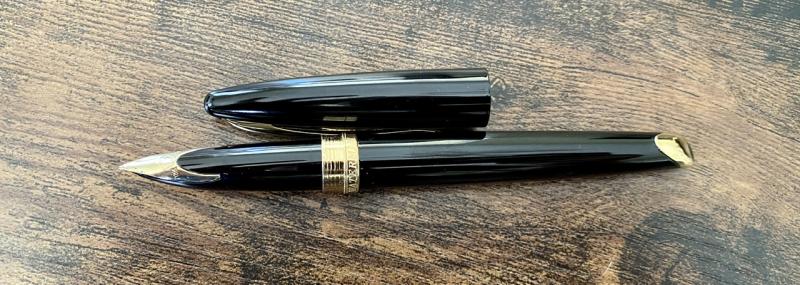
Hi everyone. I picked up this pen at a flea market today and I'm wondering if anyone can help me identify it. After searching around the interwebs, it looks like it's a Waterman Carene rollerball but the clip has an emblem on it. I'm not sure if this is some kind of corporate personalization or what? I don't even know if this is a legit Waterman. I don't own any others and don't have much experience with them. I've included a few pictures here. Sorry for the horrible photos. The pen body is blue with a black grip section.The cap is silver with a gold clip Thanks for any guidance! -
Hi. In two weeks time I will be sitting seven exams where I will need to write some 5000 words in 2 1/2 hours. I want to buy the Waterman Carene, would you recommend the Fine or Medium? Currently, I've been using the Hemisphere (Fine) for the past four years but I found it scratchy and quite slow, my handwriting can get quite large when writing quickly which makes it a little tiring Thank you
-
Hi guys, I like the pens designs by Waterman and Iove the black lacquer GT combination. I visited the Waterman website to see the models - Hémisphère, Expert & Carène in this color. Even though black lacquer, the pens color looked different in the photographs (different blacks!). This is what the color description (not title) on each model read. They were also different with the exception of Expert and Carène Essential! Hémisphère Black Fountain Pen GT ...the black and gold duo in superior smooth lacquer... Expert Black Fountain Pen GT ...the deep black of its lacquer... Carène Black Sea Fountain Pen GT ... high-gloss black lacquer... Carène Essential Black and Gold Fountain Pen GT ...deep black lacquer... As you can see the pens finishes in all the photographs looks different even though all of them are black lacquer. A lot of you must have seen and used these pens. Are they any different or is it just the photographs? I need your help. As I unfortunately don't have access to a retail shop to go try out pens and get to know them first hand before purchasing them. Do black lacquer pens more easily attract micro scratches than the rest of the finishes even when handled with care? If so how can I care for these pens so that the finish lasts? Thank you in advance guys & gals for all your input! Hope your answers help a whole lot of newbies. Pete :")
-
I am considering to buy a Carène. Thus I wondered which cases I could use to carry it around. I would use this pen at home and probably in environments like a university. Which cases fit? Which cases do you think are good? Maybe: which cases match the design? I am looking forward for recommendations. I glanced at a simple case by Lamy ( http://www.lamyshop.com/lederwaren-lamy-a112.html ). Maybe some of you gained experience with this case?