Jump to content

Pen Won't Write


UKFan643

Recommended Posts

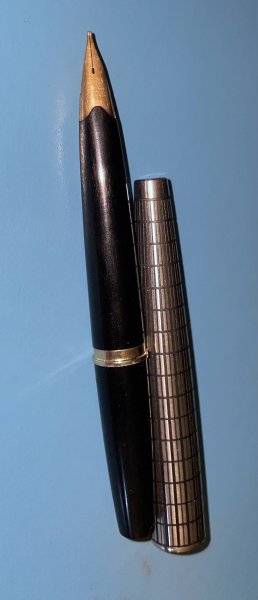
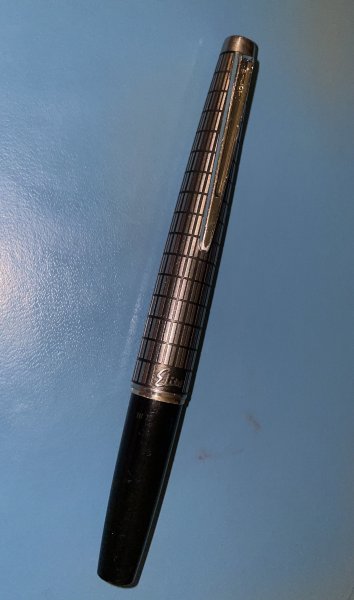
Hi all. I have a Parker Latitude that I received for Christmas this last year. It is my first fountain pen, and so sorry if this seems like an obvious question. This is my first re-fill, as I haven't had much writing to do this past few months, and when I refilled the ink, the pen will no longer write. I"m sure I got the ink in the right, and I'm sure I put the ink holder back into the pen right. I have been trying and trying to get ink to come out, and it won't. I guess I might need to clean it, but I wouldn't even know where to start. Anyone have any advice? Thanks.

Link to comment
Share on other sites

  • Replies 12
  • Created
  • Last Reply

Top Posters In This Topic

  • UKFan643

    6

  • Shangas

    2

  • skybird

    2

  • Pengrump

    1

Popular Days

Top Posters In This Topic

DId you ensure that the cartridge (I assume that is the type you have) is pushe in all the way to puncute the seal? Take it out and tap the end on your finger to see if ther is ink flow.

If it is open and flowing, there must be dried ink causing the blockage - flush it with water to clean it and dry it the with a sof tissue and try again...........

Sic Transit Gloria


"Gloria gets seasick"

Link to comment
Share on other sites

DId you ensure that the cartridge (I assume that is the type you have) is pushe in all the way to puncute the seal? Take it out and tap the end on your finger to see if ther is ink flow.

If it is open and flowing, there must be dried ink causing the blockage - flush it with water to clean it and dry it the with a sof tissue and try again...........


I actually use the included cartridge that came with it, the refillable type. It has a small ball bearing inside. It looked pretty clean when I inserted it, so I will try again. I don't know if there could be dried ink at the tip of the pen that won't allow ink to flow. Should I try to flush that with water? I wouldn't want anything to rust.

Link to comment
Share on other sites

I actually use the included cartridge that came with it, the refillable type. It has a small ball bearing inside. It looked pretty clean when I inserted it, so I will try again. I don't know if there could be dried ink at the tip of the pen that won't allow ink to flow. Should I try to flush that with water? I wouldn't want anything to rust.


Rust - I very much doubt that in a Parker pen. Ink is far more corrosive than water. I would use cold first then warm if it doesn't work. If that still fails, which shouldn't in a new pen then get an ink solvent from you local art supply house - Higgins is the one I use. But I feel that the cartridge may be faulty. Dunno too much - I gave up on them ages ago for bottled ink.

Sic Transit Gloria


"Gloria gets seasick"

Link to comment
Share on other sites

Rust - I very much doubt that in a Parker pen. Ink is far more corrosive than water. I would use cold first then warm if it doesn't work. If that still fails, which shouldn't in a new pen then get an ink solvent from you local art supply house - Higgins is the one I use. But I feel that the cartridge may be faulty. Dunno too much - I gave up on them ages ago for bottled ink.


I must have misspoke. I'm using bottled ink, and using what I have heard called a converter in order to fill the ink. It has the little ball bearing inside, and a piston that I can slide up and down. I put the tip of it into the bottled ink and slide the piston up to fill it. Then, I put the converter back into the pen. Just now, I took the piston and forced it down until ink started coming out of the tip. After doing that, I was able to write for about 2 sentences and then it stopped almost immediately. It's almost like there is nothing forcing the ink down. I am lost.

Link to comment
Share on other sites

From what I gather, you're taking the converter out of the pen, immsering it in an ink-bottle, filling it, and then putting the converter back into the pen, is that right?


If it is, you don't have to do that. Leave the converter in the pen, and fill it through the nib. If the nib is made of gold, it won't rust. You have nothing to fear.


If the pen is clogged, a soaking and gentle tapping of the pen in cold water should fix it up. Leave it to have a bath overnight. Worry not about the rusting. Gold doesn't rust.

http://www.throughouthistory.com/ - My Blog on History & Antiques


Link to comment
Share on other sites

Since the Parker Latitude has a steel nib, I don't know that I would let it soak overnight. It'd probably be okay, but why chance it? Soaking for a shorter time is fine though.


It does sound like you have ink that dried up in the section, the part that holds the nib and feed. To get it out, there are a couple of things I'd do. First I'd empty the converter of ink, attach it to the pen, and draw cool water into the pen and expel the water several times using the converter. If you're succeeding, the water that you expel should be inky. Keep repeating the procedure until the water is clean. Then let the point rest on some paper towels in a empty container so the last of the water will wick into the towels. If the towels are relatively clean after you let the nib sit on them for an hour, you can probably fill the pen and start writing. If the towels are inky, you probably need to fill the converter with water a few more times and expel the water until the ink is gone.


If when you empty the converter of ink and try to fill it with water, it doesn't fill, then you might want to get an ear syringe from the drugstore and use it to force water through the section of the pen to clear out any clogged ink. You just fill the ear syringe with water and put it into the section where the converter would attach and squeeze over the sink as many times as it takes to clear the ink out of the pen. I've done this when I couldn't get a pen clear of ink by using the converter, and it usually works pretty well, but if it doesn't, there is one more thing I'd try. Get some clear, household ammonia and mix one part of it to ten parts of water and try running that mixture through the section with the ear syringe. If you use ammonia and water, be sure to flush the pen with plain water afterwards.


Good luck, and enjoy your pen. I have a steel Parker Latitude that I carry around when I'm in places where I don't want to risk using a pen that might get scratched up. It's a good writer and nearly indestructible.

Link to comment
Share on other sites

Thank you all very much for the help. I never realized I could fill my pen by leaving the converter in. I will try to expel all the ink and try to wash it out. I will keep you posted. Great information.

Link to comment
Share on other sites

Well, I have just started to clean this pen and I can already tell this was the problem. I had used a blue ink cartridge when I first got the pen, and then refilled it with a black ink cartridge before I got to the converter. When I started cleaning, I saw a LOT of blue ink, which is weird since it was only in there about three times ago. Now, I'm finally getting the black ink out of there. I'm assuming by what I'm seeing that I should maybe do this cleaning everytime I need to refill it? Or would that be too much?

Link to comment
Share on other sites

You don't need to clean the pen every time you put in a new cartridge. However, if you won't use the pen for a while, it is always good to clean it out first (rinse it until the water is pretty clear) and store it that way. Same thing if you did store it with ink in it - you might need to clean it first.


Hope this helps!


Erick

Using right now:

Jinhao 9019 "F" nib running Birmingham Firebox

Sheaffer Legacy 2025 "M" nib running Kuretake Shikon

Radius 1934 Settimo "F" nib running Pelikan Olivine

Majohn 140 "M" nib running Lamy Dark Lilac

Link to comment
Share on other sites

You don't need to clean the pen every time you put in a new cartridge. However, if you won't use the pen for a while, it is always good to clean it out first (rinse it until the water is pretty clear) and store it that way. Same thing if you did store it with ink in it - you might need to clean it first.


Hope this helps!


Erick


Sure did. Thanks a lot.

Link to comment
Share on other sites

Hi UKFan, nice to hear you got your pen working again :)


I admit that I almost never clean my pens. I know, I know, naughty naughty Shangas...


But the fact of the matter is that pens with inbuilt filling-systems or converters don't need as thorough or frequent (every few months) cleaning and flushing as cartridge-fillers, because the ink in an older, sac-filler or a converter or piston filler, is always forced out of the pen when you fill and empty it, so it keeps it relatively clean.


On the other hand, your cartridge-filler doesn't have this option. Ink comes in from only one end (the cartridge, from the top) and not from the other end (the nib, which it would if it was a converter or inbuilt-filling system pen). This puts the pen at a disadvantage, I believe and for the pen to work properly it should be cleaned regularly.


I think cleaning every single time you change a cartridge is excessive. I've heard stories of people running through a cartridge a day and a box a week. I say if you flushed and cleaned your pen every time you finished a box of cartridges, that should keep it running smoothly :)

http://www.throughouthistory.com/ - My Blog on History & Antiques


Link to comment
Share on other sites

What you described as the filling mechanism (syringe filler with a ball bearing or spring) for use with bottled ink is indeed a converter.


Considering that ink is in contact with the steel in the working parts of the pen, the nib will certainly withstand even a couple of days of soaking without damage.


Soaking may not be needed, because you can use the converter to flush out old ink. Swap out the cartridge, if that's what you used, for the converter. Dunk the section in a water-filled container that will not tip over. Operate the syringe until no more ink comes out of the nib. If you're storing the pen for a while, make sure you shake out any water left and help it to dry by standing it up in a glass, point resting on absorbent paper or material.

Link to comment
Share on other sites

Create an account or sign in to comment

You need to be a member in order to leave a comment

Create an account

Sign up for a new account in our community. It's easy!

Register a new account

Sign in

Already have an account? Sign in here.

Sign In Now


×
×
  • Create New...