Jump to content

Science of Ink?


scratchy

Recommended Posts

What is ink actually composed of at the microscopic level? Is it a colloidal mixture of pigment particles? What happens when a paper chromatograph is done? Can anyone tell us the chemistry of ink? Are some inks buffered to make their pH stable over time? Or are these all trade secrets?

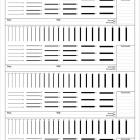
Sailor Professional Gear GT B Nib

Sailor Sapporo GT F Nib

Pelikan M1000 (black) B Nib

Bexley Simplicity bronze GT B nib

Pilot VP blue/GT B nib

Link to comment
Share on other sites

  • Replies 16
  • Created
  • Last Reply

Top Posters In This Topic

  • tfwall

    3

  • scratchy

    3

  • Sholom

    2

  • dcwaites

    2

Top Posters In This Topic

I don't know about ink specifically, but a great reference book for non-scientists regarding pigments and dyes is The Artists Handbook of Materials and Techniques, which goes into great detail on those two materials, as well as a lot of other stuff.


- R

Link to comment
Share on other sites

1) What is ink actually composed of at the microscopic level?

2) Is it a colloidal mixture of pigment particles?

3) What happens when a paper chromatograph is done?

4) Can anyone tell us the chemistry of ink?

5) Are some inks buffered to make their pH stable over time?

6) Or are these all trade secrets?

1) Fountain pen ink is made of dissolved dyes.


2) India ink (and presumably other colours made for calligraphic dip nibs) contains pigment particles. If you use these inks in your FP, you will end up with a small pointy stick suitable for poking, but no longer suitable for writing, as the solids will settle out in the fine gaps in the feed, collector and tines and clog the whole pen up.


3) This is what happens when you do kitchen bench chromatography with inks (in this case old Parker Penman Ebony and current Parker Penman Black)

post-9467-1206502622.jpg


4) Probably, but not me. Ask Nathan of Noodlers.


5) Fountain pen inks range in pH from 2.x to 8 or 9, depending on brand and ink. Most, but not all, of Noodlers inks are around 7. Acidity control doesn't seem to be important, so I suspect buffering is not used, but I am only inferring.


6) Yes. Swallow your computer after reading this.


fpn_1412827311__pg_d_104def64.gif


“Them as can do has to do for them as can’t.


And someone has to speak up for them as has no voices.”


Granny Aching

Link to comment
Share on other sites

:ltcapd: maybe I could just make a silicon chip sandwich out of it.....


Thanks dcwaites for taking the time to answer my questions


I've just thought of another one: does anyone find residues or cloudiness at the bottom of their bottle of ink?

Sailor Professional Gear GT B Nib

Sailor Sapporo GT F Nib

Pelikan M1000 (black) B Nib

Bexley Simplicity bronze GT B nib

Pilot VP blue/GT B nib

Link to comment
Share on other sites

:ltcapd: maybe I could just make a silicon chip sandwich out of it.....


Thanks dcwaites for taking the time to answer my questions


I've just thought of another one: does anyone find residues or cloudiness at the bottom of their bottle of ink?

Surely that would be a silicon chip buttie?


Some people have found gunge of various sorts in their ink. Do a search on the FPN.

It generally means that the ink is growing nasty biologicals that you don't want in your pens. Ditch the ink. Keep the bottle. You will need it when you start mixing inks to get the perfect (for you) colour.


fpn_1412827311__pg_d_104def64.gif


“Them as can do has to do for them as can’t.


And someone has to speak up for them as has no voices.”


Granny Aching

Link to comment
Share on other sites

My understanding is that modern fountain pen ink is: water, aniline dye(s), surfactant(s), and biocide(s)...


How much of what and what other "secret ingredients" is something that I suspect most ink makers would not share.


I'm not an expert by any stretch...


(edit for disclaimer)

Edited by Rapt

RAPT

Pens:Sailor Mini, Pelikan Grand Place, Stipula Ventidue with Ti Stub nib, Pelikan M605 with Binder Cursive Italic, Stipula Ventidue with Ti M nib, Vintage Pilot Semi-flex, Lamy Vista, Pilot Prera

For Sale:

Saving for: Edison Pearl

In my dreams: Nakaya Piccolo, custom colour/pattern

In transit:

Link to comment
Share on other sites

All good answers so far. Let me just add a little detail since I run a chemistry lab and have experimented with making my own ink:


1. Most fountain pen inks are composed of (at least) dye, water, preservative, and humectant (to keep the ink from drying too fast). I don't own Noodler's Black, but from what I've read and my experiments with Green Marine (which appears to contain some black in it - it is classed as "almost bulletproof"), the Black sounds like it is a colloidal material. For our purposes, a colloid is a particle that is too small too settle from gravity and doesn't like to stick to its mates so it doesn't clump and form bigger particles. Such particles are almost invariably well under 1 micron (micrometer) in size. This means they are well under 1/100 the width of the finest passages of a fountain pen and should pass freely through them. Carbon-based blacks like Pelikan Fount India and Platinum Carbon operate similarly, but the Noodler's apparently uses a synthetic black, a dye that forms aggregates of colloidal size.


2. So the answer is fountain pen ink is usually a dye solution, but appropriately stabilized colloidal suspensions can be used too. Actually at high concentrations some dyes form aggregates of 2 or more molecules but these are so small that they usually behave as true solutions rather than as colloids.


3. Chromatography (paper or other) works when the dyes or components being separated have slightly different affinities for either the solid support (cellulose fibers for paper) or if water is not the eluant (stuff running up the paper) then water adsorbed onto the solid support. As the eluant front moves, the dyes that are more attracted to the support get slowed down more than the ones that aren't, so they separate on the paper.


4. In addition to the components I mentioned in #1, I imagine most inks contain some sort of surfactant to regulate their surface tension. Note that just because two inks have the same surface tension doesn't mean that they will behave the same if that surface tension is reached with different surfactants. This helps explain why some inks foam or nib creep or flow or bleed through more than others. I believe many (most?) inks also contain some sort of corrosion inhibitor to protect pens and nibs with steel parts. I'm not sure how many people in FPN know that many dyes are not available in anything close to 100% pure form, either containing small amounts of impurities that cannot be economically removed or in some case containing fairly large amounts of additives either required as part of the dye making process or to help make the dye more soluble, more stable, easier to handle, or to help maintain color consistency from batch to batch of dye.


5. The dyes themselves (or their impurities- see below) can provide some pH buffering as could the corrosion inhibitor, but if I was an ink manufacturer, I'd want to intentionally add an pH buffer as well. Don't know if the manufacturers do though.


6. Ink making as practiced today seems to be almost entirely based on trade secrets. There are some patents from the 1940s and earlier that give some insight into what the formulation practices were at that time.


Incidentally, I'd like us to get away from using the phrase "aniline dye" around FPN as its use has led several people astray in their thinking about dyes and ink making. The terminology is obsolete, as relatively few dyes made today actually start with aniline, and many aren't even chemically related to aniline in any meaningful way. "Synthetic dye" (most of them are these days) or organic dye (as opposed to inorganic dyes, of which I can't think of any in commerce) would be better names.

Link to comment
Share on other sites

All good answers so far. Let me just add a little detail since I run a chemistry lab and have experimented with making my own ink:

...

Incidentally, I'd like us to get away from using the phrase "aniline dye" around FPN as its use has led several people astray in their thinking about dyes and ink making. The terminology is obsolete, as relatively few dyes made today actually start with aniline, and many aren't even chemically related to aniline in any meaningful way.

If you could post a few quick structural formulae (skeletal) of modern dyes used in ink, that would be of great interest to me (and who knows, maybe some others?....). You could perhaps use FPs loaded with inks based on the structures you draw.

Link to comment
Share on other sites

Thanks sholom for that superduper reply - I have even printed it off for future reference! I was wondering, considering the putative mixture of additives and dyes and colloidal material, whether that is one reason why nibs are often made of gold, which is relatively non-reactive chemically?

Sailor Professional Gear GT B Nib

Sailor Sapporo GT F Nib

Pelikan M1000 (black) B Nib

Bexley Simplicity bronze GT B nib

Pilot VP blue/GT B nib

Link to comment
Share on other sites

Thanks sholom for that superduper reply - I have even printed it off for future reference! I was wondering, considering the putative mixture of additives and dyes and colloidal material, whether that is one reason why nibs are often made of gold, which is relatively non-reactive chemically?


Initially, nibs were made of gold for that very reason. Gold nibbed pens could survive harsher pH and chemical constituents which would discolor or damage a steel nib. Today, with the modern formulation of inks, this is no longer a concern and the nibs are gold for the perceived value to the consumer. Many people automatically think gold nibs are nicer, more precious or softer than steel ones. Both types can give excellent results with modern inks, it is just a consumer choice which to buy.

Link to comment
Share on other sites

All good answers so far. Let me just add a little detail since I run a chemistry lab and have experimented with making my own ink:


snipped to save space


Thanks Sholom for an excellent post. Would you know what makes an ink smooth? From what I read in your post, it would sound like surfactants are responsible? Would be interested to her your point of view on which inks are the smoothest.

http://jonathan.hs.cheng.googlepages.com/SigGoodMen.jpg
Link to comment
Share on other sites

Would you know what makes an ink smooth?


Smoothness is a perceived characteristic which is difficult to quantify. Surfactants affect the surface tension of a liquid (its tendency to blob or spread out) and will partially determine how well an ink flows. This is certainly part of any smoothness you perceive. Other factors to consider include ink flow rate (wet writer v. dry), tine finish (ultra-smooth v. toothy) and paper finish (laid v. smooth press). Surfactants also greatly influence the feathering aspects of an ink, along with paper sizing and finish. Therefor, it is essentially impossible to talk about the "smoothest" ink any more than we can quantify the "best" pen. There are just too many variables, real and perceived, for any objective determination to be made.

Link to comment
Share on other sites

Would you know what makes an ink smooth?


Smoothness is a perceived characteristic which is difficult to quantify. Surfactants affect the surface tension of a liquid (its tendency to blob or spread out) and will partially determine how well an ink flows. This is certainly part of any smoothness you perceive. Other factors to consider include ink flow rate (wet writer v. dry), tine finish (ultra-smooth v. toothy) and paper finish (laid v. smooth press). Surfactants also greatly influence the feathering aspects of an ink, along with paper sizing and finish. Therefor, it is essentially impossible to talk about the "smoothest" ink any more than we can quantify the "best" pen. There are just too many variables, real and perceived, for any objective determination to be made.


Yup. The humectant can also act as a lubricant (think glycerine, which was used in Waterman inks and may still be). Both the surfactant(s) and humectant can also affect the rate at which the ink will penetrate into the paper. I would think that too fast penetration might make for a "dry" feel, but that is hypothesis, not fact.


Link to comment
Share on other sites

As Chemyst points out, the nib material does not effect the writing characteristics of the pen. Secondly, he points out that it is a perceived value, that translates to more sales. Have you noticed that any pen that is usually made with a gold nib, begins roughly in the one hundred dollar range? Manufacturers could sell us great pens with steel nibs, but it seems that these pens are dominant in the lower priced segment of the market.

Link to comment
Share on other sites

Oh by the way, would it be possible to reverse engineer the components that make up inks? I would think that one can get a pretty good idea of what the chemical constituents are of inks with the proper tools.

Link to comment
Share on other sites

Oh by the way, would it be possible to reverse engineer the components that make up inks? I would think that one can get a pretty good idea of what the chemical constituents are of inks with the proper tools.

Yes, of course. It could take a lot of money if the dye is a proprietary chemical or there are several with similar characteristics.


Actual protocol would vary depending on what works for a particular dye, but it would run something like this:


1.) Solvent extraction to separate organic compounds (some dyes, biocide, preservatives) from aqueous compounds (water, pH buffer, other dyes).

2.) HPLC Prep column to separate the different compounds in the two categories above.

3.) Some lab clean-up (more HPLC, re-crystallization) to purify the individual compounds

4.) Analysis of compounds (Flame AA, GC-MS,UV-Vis, IR, C & HNMR, elemental analysis)


For an ink made from widely available commercial compounds, this could take a few days. For something more exotic, like a proprietary dye that is made by the company inhouse, this could take weeks. Replicating a proprietary dye can be difficult as well, a total synthesis of a multi-cyclic organic system is generally enough to get you a PhD most anywhere. There are lots of synthetic pathways, most are dead-ends, but you don't know until you run the couple dozen possible ones in a lab.

Edited by Chemyst
Link to comment
Share on other sites

Create an account or sign in to comment

You need to be a member in order to leave a comment

Create an account

Sign up for a new account in our community. It's easy!

Register a new account

Sign in

Already have an account? Sign in here.

Sign In Now


  • Most Contributions

    1. amberleadavis
      amberleadavis
      43972
    2. PAKMAN
      PAKMAN
      35662
    3. inkstainedruth
      inkstainedruth
      31662
    4. Ghost Plane
      Ghost Plane
      28220
    5. Bo Bo Olson
      Bo Bo Olson
      27747
  • Upcoming Events

  • Blog Comments

    • Misfit
      Oh to have that translucent pink Prera! @migo984 has the Oeste series named after birds. There is a pink one, so I’m assuming Este is the same pen as Oeste.    Excellent haul. I have some Uniball One P pens. Do you like to use them? I like them enough, but don’t use them too much yet.    Do you or your wife use Travelers Notebooks? Seeing you were at Kyoto, I thought of them as there is a store there. 
    • A Smug Dill
      It's not nearly so thick that I feel it comprises my fine-grained control, the way I feel about the Cross Peerless 125 or some of the high-end TACCIA Urushi pens with cigar-shaped bodies and 18K gold nibs. Why would you expect me or anyone else to make explicit mention of it, if it isn't a travesty or such a disappointment that an owner of the pen would want to bring it to the attention of his/her peers so that they could “learn from his/her mistake” without paying the price?
    • szlovak
      Why nobody says that the section of Tuzu besides triangular shape is quite thick. Honestly it’s the thickest one among my many pens, other thick I own is Noodler’s Ahab. Because of that fat section I feel more control and my handwriting has improved. I can’t say it’s comfortable or uncomfortable, but needs a moment to accommodate. It’s funny because my school years are long over. Besides this pen had horrible F nib. Tines were perfectly aligned but it was so scratchy on left stroke that collecte
    • stylographile
      Awesome! I'm in the process of preparing my bag for our pen meet this weekend and I literally have none of the items you mention!! I'll see if I can find one or two!
    • inkstainedruth
      @asota -- Yeah, I think I have a few rolls in my fridge that are probably 20-30 years old at this point (don't remember now if they are B&W or color film) and don't even really know where to get the film processed, once the drive through kiosks went away....  I just did a quick Google search and (in theory) there was a place the next town over from me -- but got a 404 error message when I tried to click on the link....  Ruth Morrisson aka inkstainedruth 
  • Chatbox

    You don't have permission to chat.
    Load More
  • Files


×
×
  • Create New...