Jump to content

Curious Shading


USG

Recommended Posts

Looking at the original examples... one thing that stands out to me is that the shading is consistent across the letters and between the two examples (both done by the same person). Which suggests that direction & pressure of the pen stroke are part of the factors at play here. Whatever the constituents of the ink itself, the shading is not occurring at random.

It also reminds me that one pro somebody mentioned somewhere to using fountain pens for important signatures or documents is how much harder it is to forge when it's not just the shape, but how you shaped the letters that somebody has to imitate because the line thickness and shading will vary based on the direction, speed and pressure of the pen stroke.

Link to comment
Share on other sites

  • Replies 126
  • Created
  • Last Reply

Top Posters In This Topic

  • USG

    32

  • Bo Bo Olson

    15

  • A Smug Dill

    12

  • txomsy

    9

Top Posters In This Topic

Posted Images

16 hours ago, USG said:


I could be wrong but it seems that you are mostly talking about forms of calligraphy in the first 2 paragraphs.


Once British and French roundhand became the de facto business hand, up until the domination of Palmer's Business Writing and others like it around the turn of the 20th century and even a good deal after that, business writing from professional penmen didn't have the distinction of "calligraphy" in the way that we think of the term today, and in fact, that term didn't exist at that time. The writing with traditional pressure-based shading was considered "normal writing" and would have been the standard of practice in all major US and most European/British businesses. The assumption was that all of the office-workers would be so trained in writing, and they would, to a lesser or greater extent, all write at least in some imitation of that form. There wasn't "calligraphy" per se in the way that we think of it today. However, even at that time, you could find the extreme shading examples, because the traditional pressure-based shaded lettering could naturally lend itself to extreme shading unless the ink that was being used was specifically made properly to write more thickly and uniformly. Even so, this extreme shading would show up in rapid writing when you weren't worrying about having the absolute perfect amount of ink in your pen. 


Before this time, when Chancery hands were the dominant forms, you could still get this sort of shading, but we don't have nearly the same level of record as we did after this time period. A lot of the chancery hands (or the less formal secretary hand) could be written with a relatively thick amount of ink, and that would reduce that shading unless one was really writing quickly. That's why Da Vinci's works can be interesting, because he wasn't always aiming for perfect form in his writing.


16 hours ago, USG said:

Would it be possible to link to some of DaVinci's shading so I can see what it looked like.  I tried to search for it but all I found was stuff that looked like traditional shading.  I'm sure it's there I just couldn't find it. 


You can see these examples as forms of extreme shading attributed to Da Vinci or others, they certainly don't represent the bookhand standard that would have been used by professional authors copying out manuscripts for distribution, and instead show a wider range of color variation based on his writing without as much attention to having an even hand:


leonardo_notes.jpg?resize=810,515&ssl=1

Leonardomirrorwriting-1024x576.jpg

d7e742aae3355276e7a2e0586f8a06fa.jpg

article-1559670306-b03506d8db6db0a9fe54f


It's also worth noting that even in modern writing, the pressure of the pen can increase or decrease the likelihood of seeing extreme shading. 


16 hours ago, USG said:


In the 3rd paragraph you're talking about "blunt steel nibs" and Louis Madarasz calligraphy.  That type of "extreme shading" is part of the historical record as a form of calligraphy.


What Madarasz did was mostly business correspondence and professional work, for which he is rightly famous. That isn't really calligraphy as mentioned above, though he also did the ornamental works for more formal presentations as would have been also part of his job at the time, which is now the domain of the modern "Calligrapher." However, Madarasz would never have been so crass and unprofessional so as to use blunt steel nibs in his professional work. That would have been highly unprofessional. Rather, because of his fame, many penmen were also quite interested in the nature of his writing informally, on a non-professional level. For that, he would use the worn out pens that were not suitable for professional use. He wrote much more quickly, and did not care for the super hairlines or the large shading that would have created the professional look. Here's an example:


2b90ea5292e800723f2eb2f18b5b2ad5.jpg


Here's an example in the Roundhand style from around the same era:


9323358_1.jpg?v=8CD24A286306B50


In these, I'm not worried about the thick and thin of the lines, because that's characteristic of the time regardless, but you can also see that the range of hue/saturation is also quite high. Now, because these were done in cursive, this would make the form of the shading look a little different, but the range of saturation is still there. If we used the same overall ink, pen, and paper, and instead wrote with equal rapidity and attention but with a printed hand, as the OP's original examples do, we would likely see a similar level of extreme shading, because the very act of printing is likely to greatly increase that sort of shading if the pen, ink, and and writing size can support it. 


16 hours ago, USG said:


 But here's the thing.... In the samples I provided, there were no heavily shaded, wide down strokes where pressure was increased or wispy thin light strokes where pressure was reduced, which would have classified it as historical shading.  Instead the lines are uniform in thickness with vacuous areas punctuating the solid color of the letters.  Almost the complete opposite of what is seen in historical calligraphy or the inadvertent shading that occurs in normal writing.


Now, if you don't like that extreme shading, you can find that writing in cursive will reduce the impact of such shading because it will reduce the number of extreme color shifts, since those color shift happen primarily at points where the pen crosses a previously still wet line or where the pen lifts. If you are printing, that happens a lot, and so the shading points are more numerous, but if you write in cursive, with less pen lifts and less crossing, then you will see less of that shading, even though the pen and ink are the same. 


An increase in shading with traditional inks can be attributed at least in part to an increase in the number of people who prefer to print large letters as their main style of writing. 


Another thing to remember is that many of the reproductions of the older writing was done with technology that tended to eliminate or reduce the amount of visible shifts in saturation. If you 


If you use a traditional ink like Encre Authentique by Herbin with a dip pen, and you follow traditional shading, you will *still* get extreme shading in some cases if you are being rapid and casual about your writing. This is independent of whether or not you are creating traditional shading via pressure. 


As far as inadvertent shading, both the shading in your original example and the shading that is typical in most less saturated ink in fountain pens, such as the example of Lamy Blue Black writing from the 1980's, is "inadvertent" in the sense that it is a side-effect of normal writing: you do not need to do anything intentional to get that shading effect. 


16 hours ago, USG said:

I have stub, italic and and OM nibs that do what you describe as historically accurate shading, with the thickened, darkened down strokes and lighter up and side strokes.  It looks nothing like the samples, which is why I labeled them as I did.


All stub, italic, and OM nibs that I have ever seen will exhibit the sort of shading that you posted in the originating post. The fact that some of the lines are thick and some thin doesn't change whether or not you get extreme color variations (except that thin strokes can sometimes decrease the likelihood of seeing that extreme shading, or reduce it in some inks). However, if you write with such nibs using typical inks, especially inks which are more faithful to the original inks of the heyday of fountain pens, you can easily get that kind of shading. That's why I pointed to Tolkien's writing, which was entirely for his own personal correspondence and enjoyment, and was not "calligraphy" at all. It was just characteristic of his personality. Such as this:


tolkien_letter_close2.jpg (1024×600) (pbs.org)


tolkien_letter_2124384b1.jpg


anro-001918-wa201408A10-1920x1080-crop-c0-26__0-3-676x380.jpg (676×380) (pbs.org)


9EREq.png


These all have different levels of shading, but they all at least reach the same level of extreme shading in one part or another. 


Link to comment
Share on other sites

9 hours ago, USG said:

I see what you're saying but that's just "regular" shading, isn't it.  To my eye, it doesn't look  like the type of "Curious Shading" in the first post.


9 hours ago, AceNinja said:

Yes I can see shading, but this is far from the extreme 'curious' shading that OP is talking about.


Quite frankly, if you aren't seeing it, then I suspect you're just being blinded by the ‘need’ to stick to your preferred narrative (assuming you're not now simply trolling us).


On 2/11/2023 at 9:01 AM, A Smug Dill said:

… more uneven and jarring with clear demarcation between lighter and darker shades alone the same ink line or mark.


On 2/12/2023 at 10:57 AM, USG said:

… exaggerated Fake Shading that I was referring to.  Where it looks like, in a portion of a single letter, the dye didn't soak into the paper fully.


On 2/12/2023 at 11:22 AM, USG said:

The reason I'm calling it Fake Shading is because this exaggerated form of shading didn't exist historically.  Shading was subtle not dramatic.


I did all the spotting and circling (as an overlay) using just the image @bunnspecial uploaded, without applying white balance correction, and despite some lines not being sharply in focus:


large.820923062_@bunnspecialswritingsamplewithunnaturalshading(withoutwhitebalancecorrection).jpg.0fb127aec106d8702facb69041ebc5ec.jpg


but, just to be fair (or dramatic — take your pick), given how white and stark the background is in the example images referred to by the O.P., this is what it looks like after white balance correction, while applying the same overlay:


large.356020185_@bunnspecialswritingsamplewithunnaturalshading(afterwhitebalancecorrection).jpg.a7a9d11880fce742ecbb74ca5c18d282.jpg


(Don't neglect to click to enlarge the images above.)


I endeavour to be frank and truthful in what I write, show or otherwise present, when I relate my first-hand experiences that are not independently verifiable; and link to third-party content where I can, when I make a claim or refute a statement of fact in a thread. If there is something you can verify for yourself, I entreat you to do so, and judge for yourself what is right, correct, and valid. I may be wrong, and my position or say-so is no more authoritative and carries no more weight than anyone else's here.

Link to comment
Share on other sites

2 hours ago, A Smug Dill said:


Quite frankly, if you aren't seeing it, then I suspect you're just being blinded by the ‘need’ to stick to your preferred narrative (assuming you're not now simply trolling us).


Thanks for the detailed post and taking the time to analyze it.


I am ready, time permitting, to provide further examples.


The key for me seems to be using a relatively wet broad nib. I know shading appears with finer nibs, but at least to me it's usually easier to see with a broader nib.


And as said by others, from the samples in the OP, the places where shading DOES appear seems to be more a product of how a person writes. I find regardless of the ink and how it shades, I tend to get it in the same places on letters. For me, that tends to be on cross strokes and at the bottom of down strokes, where as I've said I suspect my pen speed slows.


When I'm writing and this is still wet, on the relatively non-absorbent papers I tend to use that I can see visible pools of ink in the places that are dark, and this then turns into darker shaded areas.

Link to comment
Share on other sites

Arcfide, again copied to my writing info for my western......will be digested at my leisure.  Quite a thick slice of cake there. :thumbup:

The Reality Show is a riveting result of 23% being illiterate, and 60% reading at a 6th grade or lower level.

      Banker's bonuses caused all the inch problems, Metric cures.

Once a bartender, always a bartender.

The cheapest lessons are from those who learned expensive lessons. Ignorance is best for learning expensive lessons.


Link to comment
Share on other sites

12 hours ago, arcfide said:


Once British and French roundhand became the de facto business hand, up until the domination of Palmer's Business Writing and others like it around the turn of the 20th century and even a good deal after that, business writing from professional penmen didn't have the distinction of "calligraphy" in the way that we think of the term today, and in fact, that term didn't exist at that time. The writing with traditional pressure-based shading was considered "normal writing" and would have been the standard of practice in all major US and most European/British businesses. The assumption was that all of the office-workers would be so trained in writing, and they would, to a lesser or greater extent, all write at least in some imitation of that form. There wasn't "calligraphy" per se in the way that we think of it today. However, even at that time, you could find the extreme shading examples, because the traditional pressure-based shaded lettering could naturally lend itself to extreme shading unless the ink that was being used was specifically made properly to write more thickly and uniformly. Even so, this extreme shading would show up in rapid writing when you weren't worrying about having the absolute perfect amount of ink in your pen. 


Before this time, when Chancery hands were the dominant forms, you could still get this sort of shading, but we don't have nearly the same level of record as we did after this time period. A lot of the chancery hands (or the less formal secretary hand) could be written with a relatively thick amount of ink, and that would reduce that shading unless one was really writing quickly. That's why Da Vinci's works can be interesting, because he wasn't always aiming for perfect form in his writing.


You can see these examples as forms of extreme shading attributed to Da Vinci or others, they certainly don't represent the bookhand standard that would have been used by professional authors copying out manuscripts for distribution, and instead show a wider range of color variation based on his writing without as much attention to having an even hand:


leonardo_notes.jpg?resize=810,515&ssl=1

Leonardomirrorwriting-1024x576.jpg

d7e742aae3355276e7a2e0586f8a06fa.jpg

article-1559670306-b03506d8db6db0a9fe54f


It's also worth noting that even in modern writing, the pressure of the pen can increase or decrease the likelihood of seeing extreme shading. 


What Madarasz did was mostly business correspondence and professional work, for which he is rightly famous. That isn't really calligraphy as mentioned above, though he also did the ornamental works for more formal presentations as would have been also part of his job at the time, which is now the domain of the modern "Calligrapher." However, Madarasz would never have been so crass and unprofessional so as to use blunt steel nibs in his professional work. That would have been highly unprofessional. Rather, because of his fame, many penmen were also quite interested in the nature of his writing informally, on a non-professional level. For that, he would use the worn out pens that were not suitable for professional use. He wrote much more quickly, and did not care for the super hairlines or the large shading that would have created the professional look. Here's an example:


2b90ea5292e800723f2eb2f18b5b2ad5.jpg


Here's an example in the Roundhand style from around the same era:


9323358_1.jpg?v=8CD24A286306B50


In these, I'm not worried about the thick and thin of the lines, because that's characteristic of the time regardless, but you can also see that the range of hue/saturation is also quite high. Now, because these were done in cursive, this would make the form of the shading look a little different, but the range of saturation is still there. If we used the same overall ink, pen, and paper, and instead wrote with equal rapidity and attention but with a printed hand, as the OP's original examples do, we would likely see a similar level of extreme shading, because the very act of printing is likely to greatly increase that sort of shading if the pen, ink, and and writing size can support it. 


Now, if you don't like that extreme shading, you can find that writing in cursive will reduce the impact of such shading because it will reduce the number of extreme color shifts, since those color shift happen primarily at points where the pen crosses a previously still wet line or where the pen lifts. If you are printing, that happens a lot, and so the shading points are more numerous, but if you write in cursive, with less pen lifts and less crossing, then you will see less of that shading, even though the pen and ink are the same. 


An increase in shading with traditional inks can be attributed at least in part to an increase in the number of people who prefer to print large letters as their main style of writing. 


Another thing to remember is that many of the reproductions of the older writing was done with technology that tended to eliminate or reduce the amount of visible shifts in saturation. If you 


If you use a traditional ink like Encre Authentique by Herbin with a dip pen, and you follow traditional shading, you will *still* get extreme shading in some cases if you are being rapid and casual about your writing. This is independent of whether or not you are creating traditional shading via pressure. 


As far as inadvertent shading, both the shading in your original example and the shading that is typical in most less saturated ink in fountain pens, such as the example of Lamy Blue Black writing from the 1980's, is "inadvertent" in the sense that it is a side-effect of normal writing: you do not need to do anything intentional to get that shading effect. 


All stub, italic, and OM nibs that I have ever seen will exhibit the sort of shading that you posted in the originating post. The fact that some of the lines are thick and some thin doesn't change whether or not you get extreme color variations (except that thin strokes can sometimes decrease the likelihood of seeing that extreme shading, or reduce it in some inks). However, if you write with such nibs using typical inks, especially inks which are more faithful to the original inks of the heyday of fountain pens, you can easily get that kind of shading. That's why I pointed to Tolkien's writing, which was entirely for his own personal correspondence and enjoyment, and was not "calligraphy" at all. It was just characteristic of his personality. Such as this:


tolkien_letter_close2.jpg (1024×600) (pbs.org)


tolkien_letter_2124384b1.jpg


anro-001918-wa201408A10-1920x1080-crop-c0-26__0-3-676x380.jpg (676×380) (pbs.org)


9EREq.png


These all have different levels of shading, but they all at least reach the same level of extreme shading in one part or another. 


Thank you for your Very informative post.  I'm going to have to read it a few times to be able to digest all the information you provided.   My knowledge of the various penmanship styles is  limited.


Let's not quibble about Calligraphy, call it what ever you like, I think you know what I meant.


My point was never about the darkly shaded areas or the transitions to the slightly lighter shaded areas that occur in normal writing, it was about the large vacuous areas that punctuated the writing making it jarring and difficult to read.


None of the examples you provided looked remotely like my samples of "Curious Shading".


But I'll tell you what.  If you want to say that the shading in the samples you provided looked like my samples of "Curious Shading",  even though it doesn't,  fine, I stand corrected.  🤷‍♂️


Let's move on.  I've become much more interested in trying to reproduce curious shading. 🙂


7 hours ago, A Smug Dill said:


Quite frankly, if you aren't seeing it, then I suspect you're just being blinded by the ‘need’ to stick to your preferred narrative (assuming you're not now simply trolling us).


I did all the spotting and circling (as an overlay) using just the image @bunnspecial uploaded, without applying white balance correction, and despite some lines not being sharply in focus:


large.820923062_@bunnspecialswritingsamplewithunnaturalshading(withoutwhitebalancecorrection).jpg.0fb127aec106d8702facb69041ebc5ec.jpg


but, just to be fair (or dramatic — take your pick), given how white and stark the background is in the example images referred to by the O.P., this is what it looks like after white balance correction, while applying the same overlay:


large.356020185_@bunnspecialswritingsamplewithunnaturalshading(afterwhitebalancecorrection).jpg.a7a9d11880fce742ecbb74ca5c18d282.jpg


(Don't neglect to click to enlarge the images above.)


ASD, if you think your white balanced sample looks like my samples of "Curious Shading", which it doesn't, that's OK, you're entitled to your opinion.


Let's move on.


LINK <-- my Ink and Paper tests

Link to comment
Share on other sites

8 minutes ago, USG said:


Thank you for your Very informative post.  I'm going to have to read it a few times to be able to digest all the information you provided.   My knowledge of the various penmanship styles is  limited.


Let's not quibble about Calligraphy, call it what ever you like, I think you know what I meant.


My point was never about the darkly shaded areas or the transitions to the slightly lighter shaded areas that occur in normal writing, it was about the large vacuous areas that punctuated the writing making it jarring and difficult to read.


None of the examples you provided looked remotely like my samples of "Curious Shading".


But I'll tell you what.  If you want to say that the shading in the samples you provided looked like my samples of "Curious Shading",  even though it doesn't,  fine, I stand corrected.  🤷‍♂️


Let's move on.  I've become much more interested in trying to reproduce curious shading. 🙂


ASD, if you think your white balanced sample looks like my samples of "Curious Shading", which it doesn't, that's OK, you're entitled to your opinion.


Let's move on.


I guess whether they are "the same" depends on whether you care only about the visual result or instead the underlying mechanism.  I find the latter more interesting and think the examples from ASD and arcfide seem obviously the same, even though clearly the visual magnitude of the shading is quite different.  To me this is all just normal shading, even though the OP inks are to an extent that I would not want them.

Link to comment
Share on other sites

13 minutes ago, XYZZY said:


I guess whether they are "the same" depends on whether you care only about the visual result or instead the underlying mechanism.  I find the latter more interesting and think the examples from ASD and arcfide seem obviously the same, even though clearly the visual magnitude of the shading is quite different.  To me this is all just normal shading, even though the OP inks are to an extent that I would not want them.


Visual magnitude is an interesting way to describe it. 

LINK <-- my Ink and Paper tests

Link to comment
Share on other sites

25 minutes ago, USG said:


Visual magnitude is an interesting way to describe it. 

Now that my neurons have been able to fire a few more times 😉, I think "contrast" would be the better term.


I high frame rate and macro video of this happening seems like it would be right up the alley for a smartereveryday video.🤔


Link to comment
Share on other sites

20 hours ago, A Smug Dill said:


Quite frankly, if you aren't seeing it, then I suspect you're just being blinded by the ‘need’ to stick to your preferred narrative (assuming you're not now simply trolling us).


I did all the spotting and circling (as an overlay) using just the image @bunnspecial uploaded, without applying white balance correction, and despite some lines not being sharply in focus:


large.820923062_@bunnspecialswritingsamplewithunnaturalshading(withoutwhitebalancecorrection).jpg.0fb127aec106d8702facb69041ebc5ec.jpg


but, just to be fair (or dramatic — take your pick), given how white and stark the background is in the example images referred to by the O.P., this is what it looks like after white balance correction, while applying the same overlay:


large.356020185_@bunnspecialswritingsamplewithunnaturalshading(afterwhitebalancecorrection).jpg.a7a9d11880fce742ecbb74ca5c18d282.jpg


(Don't neglect to click to enlarge the images above.)


Ok wait, I think the 'curious shading' that you're referring to are different from what I have in my mind.  And oh I'm not trolling in this instance.

Those that you've circled in @bunnspecial's image, you're circling the place where there's quite a defined and clear boundary between the lighter and the darker shades.  So I presume that is what you meant by 'curious' shading'.


My understanding, OP @USG's 'curious shading' means the very stark difference between the lightest light area and darkest dark area.  High contrast (agreed with @XYZZYthe term of contrast).  You see, in OP's 1st post, the darkest dark and lightest light is very different, very high contrast.  The well defined boundary between light and dark is not the point here in my understanding.  

On 2/10/2023 at 12:54 AM, USG said:

1785076792_fakeshading800.jpg.cb6cd4568dbdb70fa30df232371aab0d.jpg


Link to comment
Share on other sites

11 hours ago, USG said:

My point was never about the darkly shaded areas or the transitions to the slightly lighter shaded areas that occur in normal writing, it was about the large vacuous areas that punctuated the writing making it jarring and difficult to read.


None of the examples you provided looked remotely like my samples of "Curious Shading".


But I'll tell you what.  If you want to say that the shading in the samples you provided looked like my samples of "Curious Shading",  even though it doesn't,  fine, I stand corrected.  🤷‍♂️


Let's move on.  I've become much more interested in trying to reproduce curious shading. 🙂


Alright, finally, we have some progress, but I honestly think you are making this much, much harder to gain any sort of clarity because you continue to use terms that belie an accurate representation of shading and what shading is and is not. You continue to contrast the curious shading you are seeing with "normal shading," which immediately suggests that somehow this shading is abnormal or would not normally arise under typical conditions of writing. This is inaccurate. What you call curious shading *does* arise under normal writing conditions. But, before we get any more down this rabbit hole, I'm going to define some terms more clearly, which I think will help in your interest in reproduction. You can't expect to readily reproduce what is not properly understood. 


The term shading when used in its modern context is a property of ink which describes the continuum of contrast or degree to which a given ink will exhibit a range of saturations and opacities from a pen delivering ink in a typical band of flow. Shading is only a measure of the relative contrast an ink is capable of. Shading has nothing to do with the frequency or density of the shift points in color. Thus, if you wrote two lines, one very short, and one very long, in which the short line and the long line exhibited the same relative contrast of color in the minimum and maximum ranges, these two lines would be considered to have the same degree of shading, even if one line was almost entirely a single shade, punctuated on the end by a little blob of a different intensity, while the other one might have the two colors of equal length in the line. Both have the same amount of shading. 


The example I provided have the same relative contrast in colors within a word or stroke as the examples you gave, but the pattern of shading is different. However, they are still the same level of shading, or at least within the same general range. This is important, because if we don't understand and acknowledge this point, we can't actually succeed in reproducing the shading effect you're looking for reliably. You have had a number of posts suggesting that you're view on this suggests that somehow there are differences in the underlying components between historical writing and modern writing that has resulted in a difference in the shading effect you have identified. But looking for a difference through different components is a red herring, because that's not the root cause of this behavior, at least not in totality. 


What you are calling "curious shading" is just normal shading, in that it has the same range of contrasts as is typical for many inks (though not all). Almost all inks are capable of this sort of pattern. You insist on calling everything else not the same shading because what you seem to be looking at is not shading but rather, the shading pattern, which is a very different thing. 


Thus, what you are calling curious shading is actually a combination of high shading inks with other factors (which are arguably more important and relevant) which create a shading pattern that is very tight and results in frequent contrasts within a single letter. It really matters to differentiate this, because those same inks, if they were used in a different way, would suddenly no longer exhibit curious shading. (Again, curious shading is just a bad term for this, because it is not curious in the typical implications of the word, because it is not abnormal or rare or somehow very non-typical.)


The primary driver of the frequency of shaded strokes has nothing to do with the ink, and (almost) everything to do with writing technique. As a baseline, you have to have a reasonably high shading ink, and you have to have a paper that is capable of demonstrating shading. This means that you must have a reasonably ink resistant paper that does not rapidly absorb the ink, and ideally, a paper that does not have a tendency to overly "grab" ink or disrupt the inner cohesion of the ink. A shaded stroke by definition happens because the wet blob of ink at the tip of the pen has sufficient surface tension that the ink has a tendency to want to stay with the nib of the pen until the nib is lifted. The result is that the part of a pen stroke furthest from where the nib was lifted tends to have the least amount of ink, and vice versa. The length of the final "blob" of ink in the stroke is a function of the surface tension of the ink, but all inks will reach some "breaking point," and provided that the flow of the pen is sufficiently controlled to not gush out a continuous stream of ink so rapidly that the ink does not need to break surface tension, you will get the maximum shading contrast capable of that ink with that paper. Thus, the pattern of shading that you get is more a function of the paper, pen, flow, and the length of the pen stroke than anything to do with the ink. 


Notice here that the pattern of shading is specifically around the unit of a single stroke of the pen. This assumes that each stroke is independent and non-touching with another, but touching strokes or overlapping strokes, as I discussed in my previous posts, will have an effect, depending on how dry the previous stroke is when overlapped. 


Finally, you need a pen that is broad enough to exceed the ability of the ink to spread across the entire stroke. This ensures that you do not write a line which can simply be completely filled with a single blob of ink. This is why some Broad nibbed pens often seem to write less saturated lines than their Medium counterparts. 


Now, all those things in place, the next thing that you need to do is to adjust your writing technique. To create the pattern of shading seen in the original samples, you need to write in short, distinct strokes with very many pen lifts. You also need to write in such a way that you give sufficient time for the ink to dry or anchor itself before crossing over it. Finally, you need to write large enough to break the surface tension and spread the ink, but not so large that your lines begin to have a uniform color again (such as what happens with cursive). 


Finally, just to reiterate, the previous examples shown all show the same relative contrast of shading as your original examples, or near enough so as to count, and thus, they are examples of the same degree of extreme shading. What they are not an example of is the same pattern of shading as your original examples, because, obvious as it should be now, that is a factor more of how someone writes than the ink involved. Thus, if someone talks about an ink and shading, it is typical to ignore the shading pattern as an irrelevant factor of the shading quality of an ink, because we all know that this will largely depend on how you write, and is thus more individual and not really about the ink. This is what most of our examples above are doing, because the specific pattern you see is a matter of how a particular individual writes with high shading inks, and is not a matter of the ink itself, and as such, you just won't find that pattern in the same way in other samples from people writing in a different way, though you can find some patterns that may be similar in relative shading frequency if you stick to the large, rounded, broad nibbed, print/caps writers. You previously encouraged people to ignore this element of the writing by saying that you were not specifically talking about Mountain of Ink, but if you are in fact talking about shading pattern rather than the ink itself, then the specific thing you are identify is in fact the idiosyncratic element of Mountain of Ink's writing, and not the ink itself. 

Link to comment
Share on other sites

8 minutes ago, AceNinja said:

My understanding, OP @USG's 'curious shading' means the very stark difference between the lightest light area and darkest dark area.


The range of shades an ink can render depends on the colour (as well as the paper). Of course a light blue ink is going to shading differently from a dark blue ink, irrespective of whether it's a vintage (or ‘historical’) ink product or a modern one. What's jarring visually is the clear demarcation of light and dark shades, as opposed to smoothly blended transitions along an ink track.


Are we to pretend all inks, irrespective of colour family or intensity, would (or “should”) by default — or “naturally”, or ”authentically”, such that it is not “fake” — yield a similarly narrow range of shades? Do we expect a pale blue ink to behave like a dark blue ink, or that an orange ink to behave like a blue ink? Did pale blue ink and orange ink not exist historically?


I don't have an issue with someone subjective not liking inks that have can render “too” broad a range of shades, and I certainly wouldn't want to argue them out of that feeling or gut reaction to the visual stimuli. However, the whole thing about insisting that it's “fake shading” for the first two pages of this discussion thread, speaks to mechanism of producing the shading effect, not visual impact. “Where it looks like, in a portion of a single letter, the dye didn't soak into the paper fully” also speaks to mechanism. And the O.P. insisted that it's the deliberate doing of the ink makers currently in the business, and not the way then pen wielder (e.g. Kelli “Mountain of Ink” McCown) writes or applies an ink on paper, and that “this exaggerated form of shading didn't exist historically.  Shading was subtle not dramatic.”


So @bunnspecial spoke to mechanism:


17 hours ago, bunnspecial said:

When I'm writing and this is still wet, on the relatively non-absorbent papers I tend to use that I can see visible pools of ink in the places that are dark, and this then turns into darker shaded areas.


and demonstrated that the shading can be achieved with vintage ink. If examples of such dramatic, exaggerated, even “unnatural” shading are rare in historical artefacts to which we have easy access today, is that then because people didn't write that way, or because ink makers didn't make (vintage) ink that would behave that way even if someone tried? I'm confident Kelli could get that sort of stark contrast, and with jarring transitions between shades, using “historical” pale inks.

I endeavour to be frank and truthful in what I write, show or otherwise present, when I relate my first-hand experiences that are not independently verifiable; and link to third-party content where I can, when I make a claim or refute a statement of fact in a thread. If there is something you can verify for yourself, I entreat you to do so, and judge for yourself what is right, correct, and valid. I may be wrong, and my position or say-so is no more authoritative and carries no more weight than anyone else's here.

Link to comment
Share on other sites

Maybe I am repeating myself here, but I still think that the very stark effect that is indeed seen often in Kellis pictures is merely a result of certain settings in the process of taking and processing pictures + a combination of wet writing pens, writing style, paper and the respective ink. The more one/the software involved emphasizes contrast, the more visible the border between the lighter and darker parts of each stroke will get, hence the shading may -- although all in all depicted/conveyed accurately [see the the term "fake" above and its rejection by most participants of the discussion] -- be accentuated to a point of pronounced shading/contrast that the thread starter referred to.

Link to comment
Share on other sites

29 minutes ago, arcfide said:


Alright, finally, we have some progress, but I honestly think you are making this much, much harder to gain any sort of clarity because you continue to use terms that belie an accurate representation of shading and what shading is and is not. You continue to contrast the curious shading you are seeing with "normal shading," which immediately suggests that somehow this shading is abnormal or would not normally arise under typical conditions of writing. This is inaccurate. What you call curious shading *does* arise under normal writing conditions. But, before we get any more down this rabbit hole, I'm going to define some terms more clearly, which I think will help in your interest in reproduction. You can't expect to readily reproduce what is not properly understood. 


The term shading when used in its modern context is a property of ink which describes the continuum of contrast or degree to which a given ink will exhibit a range of saturations and opacities from a pen delivering ink in a typical band of flow. Shading is only a measure of the relative contrast an ink is capable of. Shading has nothing to do with the frequency or density of the shift points in color. Thus, if you wrote two lines, one very short, and one very long, in which the short line and the long line exhibited the same relative contrast of color in the minimum and maximum ranges, these two lines would be considered to have the same degree of shading, even if one line was almost entirely a single shade, punctuated on the end by a little blob of a different intensity, while the other one might have the two colors of equal length in the line. Both have the same amount of shading. 


The example I provided have the same relative contrast in colors within a word or stroke as the examples you gave, but the pattern of shading is different. However, they are still the same level of shading, or at least within the same general range. This is important, because if we don't understand and acknowledge this point, we can't actually succeed in reproducing the shading effect you're looking for reliably. You have had a number of posts suggesting that you're view on this suggests that somehow there are differences in the underlying components between historical writing and modern writing that has resulted in a difference in the shading effect you have identified. But looking for a difference through different components is a red herring, because that's not the root cause of this behavior, at least not in totality. 


What you are calling "curious shading" is just normal shading, in that it has the same range of contrasts as is typical for many inks (though not all). Almost all inks are capable of this sort of pattern. You insist on calling everything else not the same shading because what you seem to be looking at is not shading but rather, the shading pattern, which is a very different thing. 


Thus, what you are calling curious shading is actually a combination of high shading inks with other factors (which are arguably more important and relevant) which create a shading pattern that is very tight and results in frequent contrasts within a single letter. It really matters to differentiate this, because those same inks, if they were used in a different way, would suddenly no longer exhibit curious shading. (Again, curious shading is just a bad term for this, because it is not curious in the typical implications of the word, because it is not abnormal or rare or somehow very non-typical.)


The primary driver of the frequency of shaded strokes has nothing to do with the ink, and (almost) everything to do with writing technique. As a baseline, you have to have a reasonably high shading ink, and you have to have a paper that is capable of demonstrating shading. This means that you must have a reasonably ink resistant paper that does not rapidly absorb the ink, and ideally, a paper that does not have a tendency to overly "grab" ink or disrupt the inner cohesion of the ink. A shaded stroke by definition happens because the wet blob of ink at the tip of the pen has sufficient surface tension that the ink has a tendency to want to stay with the nib of the pen until the nib is lifted. The result is that the part of a pen stroke furthest from where the nib was lifted tends to have the least amount of ink, and vice versa. The length of the final "blob" of ink in the stroke is a function of the surface tension of the ink, but all inks will reach some "breaking point," and provided that the flow of the pen is sufficiently controlled to not gush out a continuous stream of ink so rapidly that the ink does not need to break surface tension, you will get the maximum shading contrast capable of that ink with that paper. Thus, the pattern of shading that you get is more a function of the paper, pen, flow, and the length of the pen stroke than anything to do with the ink. 


Notice here that the pattern of shading is specifically around the unit of a single stroke of the pen. This assumes that each stroke is independent and non-touching with another, but touching strokes or overlapping strokes, as I discussed in my previous posts, will have an effect, depending on how dry the previous stroke is when overlapped. 


Finally, you need a pen that is broad enough to exceed the ability of the ink to spread across the entire stroke. This ensures that you do not write a line which can simply be completely filled with a single blob of ink. This is why some Broad nibbed pens often seem to write less saturated lines than their Medium counterparts. 


Now, all those things in place, the next thing that you need to do is to adjust your writing technique. To create the pattern of shading seen in the original samples, you need to write in short, distinct strokes with very many pen lifts. You also need to write in such a way that you give sufficient time for the ink to dry or anchor itself before crossing over it. Finally, you need to write large enough to break the surface tension and spread the ink, but not so large that your lines begin to have a uniform color again (such as what happens with cursive). 


Finally, just to reiterate, the previous examples shown all show the same relative contrast of shading as your original examples, or near enough so as to count, and thus, they are examples of the same degree of extreme shading. What they are not an example of is the same pattern of shading as your original examples, because, obvious as it should be now, that is a factor more of how someone writes than the ink involved. Thus, if someone talks about an ink and shading, it is typical to ignore the shading pattern as an irrelevant factor of the shading quality of an ink, because we all know that this will largely depend on how you write, and is thus more individual and not really about the ink. This is what most of our examples above are doing, because the specific pattern you see is a matter of how a particular individual writes with high shading inks, and is not a matter of the ink itself, and as such, you just won't find that pattern in the same way in other samples from people writing in a different way, though you can find some patterns that may be similar in relative shading frequency if you stick to the large, rounded, broad nibbed, print/caps writers. You previously encouraged people to ignore this element of the writing by saying that you were not specifically talking about Mountain of Ink, but if you are in fact talking about shading pattern rather than the ink itself, then the specific thing you are identify is in fact the idiosyncratic element of Mountain of Ink's writing, and not the ink itself. 


Very well done Sir, and highly technical.  👍


Because you went to the trouble to write such a lengthy and informative post, I'll go into it one more time🤪


LOL, after your dissertation on shading it's embarrassing to admit that I was not technical in the slightest, it was strictly how it looked at the time.


I'm as familiar, as any of you, with what pen and ink writing looks like and when I saw the examples I posted, it looked "fake" to me and I said so.  That didn't go well... so I changed the name to "Curious Shading".


So here's the deal.


Like I said, I'm as familiar with what pen and ink writing looks like as any of you, so contrast this example of standard writing.... (or any of the examples previously posted)

large.820923062_@bunnspecialswritingsamplewithunnaturalshading(withoutwhitebalancecorrection).jpg.0fb127aec106d8702facb69041ebc5ec.jpg


...with the sample below.  Notice the large vacuous areas where the ink appears very light.  I thought there was an order of magnitude difference between the way that looks and what you see above, or historically.  I wondered if there was something manufacturers put inks that made them "shading inks" or if it was a special nib or the scan or something else....   


And that's all there is to it.  Everything else is much ado about nothing.


1785076792_fakeshading800.jpg.cb6cd4568dbdb70fa30df232371aab0d.jpg


There has been way too much uninvited attention on Mountain of Inks. I asked repeatedly that she not to be mentioned but I was ignored time and time again. I'm going to ask the folks who dragged her name into this to please go back and remove all references to her.  She has nothing to do with this.  If I could remove her samples and choose others I would.


LINK <-- my Ink and Paper tests

Link to comment
Share on other sites

Dear @USG  Vacuous?


Besides that :

37 minutes ago, USG said:

There has been way too much uninvited attention on Mountain of Inks. I asked repeatedly that she not to be mentioned but I was ignored time and time again. I'm going to ask the folks who dragged her name into this to please go back and remove all references to her.  She has nothing to do with this.  If I could remove her samples and choose others I would.


It may not be to your liking, but others here may find it beneficial and helpful.  There are some rules about what is not allowed.  Mentioning Mountain of Inks is not amongst them.

Add lightness and simplicate.


Link to comment
Share on other sites

3 minutes ago, Karmachanic said:

Dear @USG  Vacuous?


Besides that :


It may not be to your liking, but others here may find it beneficial and helpful.  There are some rules about what is not allowed.  Mentioning Mountain of Inks is not amongst them.


Hey Kar


Yeah vacuous.  🙂  You know, like areas with little pigment. 🙂


I don't see why dragging a 3rd party into the thread would be important.  They didn't ask to be part of the thread.  It was a mistake to use samples that could be traced back to someone.  Mea Culpa.  I'd undo it if I could.


It may not be against the rules of the forum but I'm sure there are rules of etiquette.


LINK <-- my Ink and Paper tests

Link to comment
Share on other sites

21 minutes ago, Karmachanic said:

It may not be to your liking, but others here may find it beneficial and helpful.  There are some rules about what is not allowed.  Mentioning Mountain of Inks is not amongst them.


Well, her samples were shown, so this is where she got dragged into this. And even if there was no intended attack on her with the examples, I'd still like to explain what might have happened to get to how the writing looks in these samples. 


(Besides, I'd defend her with claws and teeth, if necessary, which may not be the case here anymore as we have established another term to describe the sort of pronounced shading we see. Obviously the term "fake" is a lot more loaded than had been anticipated, and being lost in translation with such an international crowd here may not have helped either.)


So, let's just say there is a phenomenon of extreme shading that has us in a lively discussion to get back on track.


I can imagine that there are as many people who loathe this look ("writing looks spotty on a page and is hard to read") as there are also those who'd pay to get exactly that ("whoaw! this is how inks can look!? I want my writing to look like that, too!").

Link to comment
Share on other sites

1 hour ago, USG said:

There has been way too much uninvited attention on Mountain of Inks.


Notwithstanding your subsequent admission that:


23 minutes ago, USG said:

It was a mistake to use samples that could be traced back to someone.  Mea Culpa.  I'd undo it if I could.


it was you who invited that attention in the first place, and didn't just refer to those particular examples once, but even after the source was clearly identified by others openly:


1 hour ago, USG said:

I asked repeatedly that she not to be mentioned but I was ignored time and time again


you referred to them in subsequent posts time and time again. Did you also try to locate, and then post, other writing samples by different people showing the same phenomenon, to draw the unwanted (as opposed to uninvited, since you invited it) attention away from her, in order to “undo” your now-conceded error?


23 minutes ago, USG said:

It may not be against the rules of the forum but I'm sure there are rules of etiquette.


I'm afraid you don't get to set the parameters and/or boundaries of a discussion, even if you initiated it, and even if you ask. It isn't a breach of etiquette to simply not oblige and allow you to steer or direct how a discussion goes in an open forum.


In any case, I went and reviewed handwriting samples of my own that I'd already posted previously, to find something that illustrates my point. @bunnspecial went and contributed a fresh example of his own handwriting. Actually, some time earlier, I went so far as to produce some new writing samples with Diamine China Blue (since you called particular attention to that ink, along with another which I don't have, in using Kelli's handwriting samples) to demonstrate that writing with Diamine China Blue ink does not have to exhibit such extreme shading, even when ‘printing’ minuscules separately from each other. But, real life intruded, and by the time I got back to finishing them, the discussion had sorta moved on, so I just left them offline. I was quite surprised to see all this discussion get all active again recently after a lull.


Perhaps next time you'll be more mindful to use your own original artefacts when mounting an argument, or providing an example or demonstration.

I endeavour to be frank and truthful in what I write, show or otherwise present, when I relate my first-hand experiences that are not independently verifiable; and link to third-party content where I can, when I make a claim or refute a statement of fact in a thread. If there is something you can verify for yourself, I entreat you to do so, and judge for yourself what is right, correct, and valid. I may be wrong, and my position or say-so is no more authoritative and carries no more weight than anyone else's here.

Link to comment
Share on other sites

5 minutes ago, A Smug Dill said:


What you choose to do, or what you choose not to do, defines who you are.

LINK <-- my Ink and Paper tests

Link to comment
Share on other sites

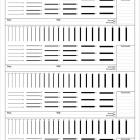
@A Smug Dill China Blue and shading ... like here?


Pens used ... 


upper left and lower left: probably a Sailor 14k Music nib in one of the pens these fit into (Sailor Pro Gear Slim, 1911s, Sailor Nagasawa Kobe Proske)

upper right: should be the reverse of said Music nib, maybe also the reverse of a 14k Sailor Zoom nib (Pro Gear Slim, 1911s, or Sailor Nagasawa Kobe Proske)

lower right : Pilot Custom Heritage 912 FA

Link to comment
Share on other sites

Create an account or sign in to comment

You need to be a member in order to leave a comment

Create an account

Sign up for a new account in our community. It's easy!

Register a new account

Sign in

Already have an account? Sign in here.

Sign In Now


  • Most Contributions

    1. amberleadavis
      amberleadavis
      43972
    2. PAKMAN
      PAKMAN
      35529
    3. inkstainedruth
      inkstainedruth
      31148
    4. Ghost Plane
      Ghost Plane
      28220
    5. Bo Bo Olson
      Bo Bo Olson
      27746
  • Upcoming Events

    No upcoming events found
  • Blog Comments

    • stylographile
      Awesome! I'm in the process of preparing my bag for our pen meet this weekend and I literally have none of the items you mention!! I'll see if I can find one or two!
    • inkstainedruth
      @asota -- Yeah, I think I have a few rolls in my fridge that are probably 20-30 years old at this point (don't remember now if they are B&W or color film) and don't even really know where to get the film processed, once the drive through kiosks went away....  I just did a quick Google search and (in theory) there was a place the next town over from me -- but got a 404 error message when I tried to click on the link....  Ruth Morrisson aka inkstainedruth 
    • alkman
      There is still chemistry for processing regular chrome (positive) films like Kodak Ektachrome and Fuji Velvia, but Kodachrome was a completely different and multistep beast. 
    • Ceilidh
      Ah, but how to get it processed - that is the question. I believe that the last machine able to run K-14 (Kodachrome processing) ceased to operate some 15 or so years ago. Perhaps the film will be worth something as a curiosity in my estate sale when I die. 😺
    • Mercian
      Take a lot of photos!   If the film has deteriorated or 'gone off' in any way, you can use that as a 'feature' to take 'arty' pictures - whether of landmarks, or people, or whatever.
  • Chatbox

    You don't have permission to chat.
    Load More
  • Files


×
×
  • Create New...