Jump to content

Curious Shading


USG

Recommended Posts

2 hours ago, WalterC said:

I don't like the term "fake shading", but am not sure what a better term would be.


I don't think there's anything fake about it. Shading as a visual effect can be more blended with seamless transitions (and more aesthetically pleasing to me, subjectively), or more uneven and jarring with clear demarcation between lighter and darker shades alone the same ink line or mark.


Analogously, I wouldn't jump to the conclusion, or use as a careless description for convenience's sake, that someone's uneven teeth or buck teeth are “fake teeth”.

I endeavour to be frank and truthful in what I write, show or otherwise present, when I relate my first-hand experiences that are not independently verifiable; and link to third-party content where I can, when I make a claim or refute a statement of fact in a thread. If there is something you can verify for yourself, I entreat you to do so, and judge for yourself what is right, correct, and valid. I may be wrong, and my position or say-so is no more authoritative and carries no more weight than anyone else's here.

Link to comment
Share on other sites

  • Replies 126
  • Created
  • Last Reply

Top Posters In This Topic

  • USG

    32

  • Bo Bo Olson

    15

  • A Smug Dill

    12

  • txomsy

    9

Top Posters In This Topic

Posted Images

I would also be very dissatisfied with the result as shown in those photos. Out of curiousity, have you seen examples of "fake shading" in person? A photo can be misleading when so much depends on the lighting. I have some shading inks where the the normal colour is matte, but the shade colour is glossy. The glossy part might appear washed out in a photo. I'm just guessing, though.

looking for a pen with maki-e dancing wombats

Link to comment
Share on other sites

16 hours ago, A Smug Dill said:


I don't think there's anything fake about it. Shading as a visual effect can be more blended with seamless transitions (and more aesthetically pleasing to me, subjectively), or more uneven and jarring with clear demarcation between lighter and darker shades alone the same ink line or mark.


Analogously, I wouldn't jump to the conclusion, or use as a careless description for convenience's sake, that someone's uneven teeth or buck teeth are “fake teeth”.


I’m just using the term Fake, to describe the type of shading that’s “more uneven and jarring with clear demarcation between lighter and darker shades”.  
 

I’m really glad you weighed in on this Sensei, because your descriptions are so much better than mine.


My recollection is that in the past, this type of exaggerated shading didn’t exist.  What I remember was the  effect you described as “more blended with seamless transitions”, which is the reason I’m calling this more recent fad Fake Shading.


This type of exaggerated, unnatural  Shading is a recent fad that manufacturers have latched onto by putting something in the ink to achieve that effect.  That there is a market for it is unquestionable, but because it’s unnatural, I’m calling it Fake Shading.


16 hours ago, mhwombat said:

I would also be very dissatisfied with the result as shown in those photos. Out of curiousity, have you seen examples of "fake shading" in person? A photo can be misleading when so much depends on the lighting. I have some shading inks where the the normal colour is matte, but the shade colour is glossy. The glossy part might appear washed out in a photo. I'm just guessing, though.


For the most part, I’m reacting to samples I’ve seen online.  I wouldn’t intentionally buy an ink advertised as a shading ink or a sheening ink.
 

My vintage inks don’t seem to shade like those examples but I’ve noticed a similar effect, although not as pronounced, from a new bottle of Diamine Kensington Blue.  OTOH I’ve seen a more traditional type of shading from Diamine Misty Blue.  A little lighter and thinner where I’ve eased up on pressure and darker and a little wider where I’ve pressed a little harder.  And to make matters more confounding, recently, this effect was from a lightly tuned ‘F’ Majohn P136 nib.


LINK <-- my Ink and Paper tests

Link to comment
Share on other sites

7 hours ago, USG said:

I’m really glad you weighed in on this Sensei, because your descriptions are so much better than mine.


You're too kind! Thank you.


7 hours ago, USG said:

This type of exaggerated, unnatural  Shading is a recent fad that manufacturers have latched onto by putting something in the ink to achieve that effect.


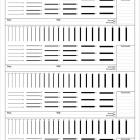
Looking at the (digital capture of) artefacts from some of my ink reviews,

large.2088714123_SailorShikioriWakauguisureviewsheet-focusonshading.jpg.b19633fb265af339d1334b3eab08207c.jpglarge.751265462_RobertOsterSydneyLavende


I don't think it has to be either-or. As you can see, where I've put down (12 in the case of Sailor Shikiori Wakauguisu, 10 in the case of Robert Oster Sydney Lavender) near-parallel vertical lines, there was a lot more distinct demarcation between the light and dark shades, than the way shading manifested in my handwriting, produced using the same pen on the same sheet of paper for a particular review.

I endeavour to be frank and truthful in what I write, show or otherwise present, when I relate my first-hand experiences that are not independently verifiable; and link to third-party content where I can, when I make a claim or refute a statement of fact in a thread. If there is something you can verify for yourself, I entreat you to do so, and judge for yourself what is right, correct, and valid. I may be wrong, and my position or say-so is no more authoritative and carries no more weight than anyone else's here.

Link to comment
Share on other sites

8 hours ago, USG said:


I’m just using the term Fake, to describe the type of shading that’s “more uneven and jarring with clear demarcation between lighter and darker shades”.  


I'm with Dill on this one.  I don't see anything "fake" about the effect you're describing (in fact I don't see anything objectionable about it at all) and I would suggest choosing terminology more carefully in the future.

Link to comment
Share on other sites

18 minutes ago, A Smug Dill said:


You're too kind! Thank you.


Looking at the (digital capture of) artefacts from some of my ink reviews,

large.2088714123_SailorShikioriWakauguisureviewsheet-focusonshading.jpg.b19633fb265af339d1334b3eab08207c.jpglarge.751265462_RobertOsterSydneyLavende


I don't think it has to be either-or. As you can see, where I've put down (12 in the case of Sailor Shikiori Wakauguisu, 10 in the case of Robert Oster Sydney Lavender) near-parallel vertical lines, there was a lot more distinct demarcation between the light and dark shades, than the way shading manifested in my handwriting, produced using the same pen on the same sheet of paper for a particular review.


Of course I see your point.


BUT no where in your samples does it show the exaggerated Fake Shading that I was referring to.  Where it looks like, in a portion of a single letter, the dye didn't soak into the paper fully.  Like there was oil on the paper.


LINK <-- my Ink and Paper tests

Link to comment
Share on other sites

35 minutes ago, ErrantSmudge said:


I'm with Dill on this one.  I don't see anything "fake" about the effect you're describing (in fact I don't see anything objectionable about it at all) and I would suggest choosing terminology more carefully in the future.


The reason I'm calling it Fake Shading is because this exaggerated form of shading didn't exist historically.  Shading was subtle not dramatic. Now that ink manufacturers are engineering their inks to produce this unnatural effect I'm going to call it Fake.


Whether it's objectionable or not doesn't make it any less Fake.


If you look at the samples ASD provided, you won't see any Fake Shading similar to the examples I initially provided (with no negative reflection on the author)

LINK <-- my Ink and Paper tests

Link to comment
Share on other sites

2 hours ago, USG said:


The reason I'm calling it Fake Shading is because this exaggerated form of shading didn't exist historically.  Shading was subtle not dramatic. Now that ink manufacturers are engineering their inks to produce this unnatural effect I'm going to call it Fake.


Whether it's objectionable or not doesn't make it any less Fake.


Just off the top of my head I can list lots of different effects that did not exist historically, but ink manufacturers have created in recent years.  Very saturated colors.  Sheening.  Glitter.  Glistening.  Pigmented inks.  Cellulose-reactive dyes. Multi-chromatic effects.  I wouldn't call these effects fake, simply the march of progress to cater to an audience that clearly demands more diversity in the writing they can get from their fountain pens.


You might object to the overly-pronounced shading effects these inks produce, and you're certainly entitled to do that.  But that doesn't make these inks "fake", any more than the hundreds of inks produced with properties that didn't exist in the golden age of fountain pens.


Link to comment
Share on other sites

One of the factors that hasn't been mentioned is Kelli, the author of Mountain of Ink. Call it "beauty is in the eye of the beholder" or what not, but I read her reviews with a grain of salt because she and I use inks and like inks for different reasons. I agree with OP: this form of shading is not my definition of a nice look. I think it makes the pen seem broken; like drawn-out hard starts. I much prefer inks that shade like Waterman's Tender Purple or Monteverde Horizon Blue—inks where the tones that are involved are no less bright or saturated, but are just a few degrees darker or further along the color wheel. Subtle shades that come out to play on special occasions.


Kelli loves the fake shading look and seems to pursue it. Many of her fans love her for it. To each their own.


To answer @inkstainedruth: according to Kelli's writeup, the Diamine China Blue writing sample was written on and with, "...an Edison Collier Blue Steel with a broad nib on a Yoseka A5 notebook." Her pens and papers frequently rotate but Kelli loves broad nibs.


I'll also point out that as a lefty I'm keenly aware of how the angle at which one writes can have an effect on the look of the ink. My lefty overhand/hook looks drier than my lefty underhand and that's because the bulk of my lefty hook writing is done, as far as the nib is concerned, with the equivalent of a righty's upward strokes. Perhaps Kelli holds her pens in a manner that others would find awkward or incorrect. Perhaps she's drawing her text rather than writing it. This paragraph is all conjecture on my part. I've never seen her write. She probably writes with her belly button.


Regardless, I'm not convinced that there are any additives involved or that Diamine is otherwise trying to get these kinds of results. While China Blue seems to be finicky/inconsistent, Kelli's sample is the only one I've seen of China blue that has such dramatic and consistent shading per letter. Have a look, if you haven't already, at @JulieParadise's entry for China Blue.

Link to comment
Share on other sites

11 hours ago, ErrantSmudge said:


Just off the top of my head I can list lots of different effects that did not exist historically, but ink manufacturers have created in recent years.  Very saturated colors.  Sheening.  Glitter.  Glistening.  Pigmented inks.  Cellulose-reactive dyes. Multi-chromatic effects.  I wouldn't call these effects fake, simply the march of progress to cater to an audience that clearly demands more diversity in the writing they can get from their fountain pens.


You might object to the overly-pronounced shading effects these inks produce, and you're certainly entitled to do that.  But that doesn't make these inks "fake", any more than the hundreds of inks produced with properties that didn't exist in the golden age of fountain pens.


ERS, I think pigmented inks might have been around for about 5000 years.


You're generalizing.  Stay on topic. The only thing under discussion is Fake Shading.  
 

I’m calling it “Fake Shading“ to differentiate it from the natural type of historical shading that everyone is familiar with.

LINK <-- my Ink and Paper tests

Link to comment
Share on other sites

10 hours ago, AmericanMonk said:

One of the factors that hasn't been mentioned is Kelli, the author of Mountain of Ink. Call it "beauty is in the eye of the beholder" or what not, but I read her reviews with a grain of salt because she and I use inks and like inks for different reasons. I agree with OP: this form of shading is not my definition of a nice look. I think it makes the pen seem broken; like drawn-out hard starts. I much prefer inks that shade like Waterman's Tender Purple or Monteverde Horizon Blue—inks where the tones that are involved are no less bright or saturated, but are just a few degrees darker or further along the color wheel. Subtle shades that come out to play on special occasions.


Kelli loves the fake shading look and seems to pursue it. Many of her fans love her for it. To each their own.


To answer @inkstainedruth: according to Kelli's writeup, the Diamine China Blue writing sample was written on and with, "...an Edison Collier Blue Steel with a broad nib on a Yoseka A5 notebook." Her pens and papers frequently rotate but Kelli loves broad nibs.


I'll also point out that as a lefty I'm keenly aware of how the angle at which one writes can have an effect on the look of the ink. My lefty overhand/hook looks drier than my lefty underhand and that's because the bulk of my lefty hook writing is done, as far as the nib is concerned, with the equivalent of a righty's upward strokes. Perhaps Kelli holds her pens in a manner that others would find awkward or incorrect. Perhaps she's drawing her text rather than writing it. This paragraph is all conjecture on my part. I've never seen her write. She probably writes with her belly button.


Regardless, I'm not convinced that there are any additives involved or that Diamine is otherwise trying to get these kinds of results. While China Blue seems to be finicky/inconsistent, Kelli's sample is the only one I've seen of China blue that has such dramatic and consistent shading per letter. Have a look, if you haven't already, at @JulieParadise's entry for China Blue.


Mr. Monk 😇


The samples are merely illustrations of Fake Shading.  
 

I’ve already stated that this post has nothing to do with ‘Mountain of Ink’ or the brand of ink, paper or pen in the samples, and that I’d prefer those things be left out of the discussion.  


LINK <-- my Ink and Paper tests

Link to comment
Share on other sites

2 hours ago, USG said:


ERS, I think pigmented inks might have been around for about 5000 years.


Nano-particle pigment inks, the first to be safe/practical for fountain pens, have been available only relatively recently.


2 hours ago, USG said:


You're generalizing.  Stay on topic. The only thing under discussion is Fake Shading.  
.


Not generalizing.  Instead I'm citing several analogous examples to point out that the novelty of your despised shading effect has nothing to do with its "authenticity" or its validity. 

Link to comment
Share on other sites

Just as an observation-


It's always seemed to me, in my own writing, that shading is an artifact not so much of pressure but of pen speed. Specifically I associate darker shaded tones with places where I'd tend to naturally show the pen down(or change directions). More particularly too I seem to get shading at the end of strokes. This often presents in vertical lines, for example, as the top being lighter than the bottom, but it can show up anywhere and I suspect that it's very much related to an individual's particular writing style.


I use a lot of different inks. I have quite a bit of vintage ink(quite literally gallons) that I use regularly. I have modern inks designed to shade, sheen, or shimmer(and incidentally with the right pen/paper even sheening inks will still shade). I use a lot of modern "traditional" inks like the standard line Waterman, Pelikan, and Montblanc inks.


Sometimes the particular way I form letters shows different dark areas than other people do writing the same letters/text. This is not something I've observed with exotic inks either-this happens with nice mostly traditional inks that tend to shade well like Montblanc Toffee Brown or Waterman South Seas Blue.


In line with this, sometimes too really, really unsaturated inks out of a wet pen can give wild effects not unlike examples in the OP. Take a look at the gigantic thread on the Montblanc forum about the Fritz Schimpf Italic Edge, which is a pen that can produce some wacky effect thanks to the nib width and overall character. I have a writing sample in that thread with Montblanc Miles Davis Jazz Blue, a very unsaturated almost chalky ink(not unlike the second one in the OP's photo). It shows some interesting shading effects out of that wide, wet nib but I attribute that mostly to the light color being "normal" for that ink.

Link to comment
Share on other sites

2 hours ago, ErrantSmudge said:


Nano-particle pigment inks, the first to be safe/practical for fountain pens, have been available only relatively recently.


Not generalizing.  Instead I'm citing several analogous examples to point out that the novelty of your despised shading effect has nothing to do with its "authenticity" or its validity. 


I don't despise Fake Shading.  I said it annoys me.


LINK <-- my Ink and Paper tests

Link to comment
Share on other sites

I feel like more descriptive terms could be useful... Maybe something like Low, Medium, and High Contrast Shading. 


I also do not care for high contrast as in this sample. I find it too hard to read. 


image.png.527f8516bf35b67ceefcccece6071fb3.png


But I do like this sort of thing. 


image.png.652a6db30765a1e95966efa402a8e8d1.png

Link to comment
Share on other sites

33 minutes ago, bunnspecial said:

Just as an observation-


It's always seemed to me, in my own writing, that shading is an artifact not so much of pressure but of pen speed. Specifically I associate darker shaded tones with places where I'd tend to naturally show the pen down(or change directions). More particularly too I seem to get shading at the end of strokes. This often presents in vertical lines, for example, as the top being lighter than the bottom, but it can show up anywhere and I suspect that it's very much related to an individual's particular writing style.


I use a lot of different inks. I have quite a bit of vintage ink(quite literally gallons) that I use regularly. I have modern inks designed to shade, sheen, or shimmer(and incidentally with the right pen/paper even sheening inks will still shade). I use a lot of modern "traditional" inks like the standard line Waterman, Pelikan, and Montblanc inks.


Sometimes the particular way I form letters shows different dark areas than other people do writing the same letters/text. This is not something I've observed with exotic inks either-this happens with nice mostly traditional inks that tend to shade well like Montblanc Toffee Brown or Waterman South Seas Blue.


In line with this, sometimes too really, really unsaturated inks out of a wet pen can give wild effects not unlike examples in the OP. Take a look at the gigantic thread on the Montblanc forum about the Fritz Schimpf Italic Edge, which is a pen that can produce some wacky effect thanks to the nib width and overall character. I have a writing sample in that thread with Montblanc Miles Davis Jazz Blue, a very unsaturated almost chalky ink(not unlike the second one in the OP's photo). It shows some interesting shading effects out of that wide, wet nib but I attribute that mostly to the light color being "normal" for that ink.


The only thing I'll add to your post is that, aside from nib generated "wacky effects", I find pressure to be as significant as speed.  As I try to visualize it, the thing about 'speed' is that during fast writing or a flourish, the pressure is decreased as the pen is lifted and increased again as the pen touches down, while it is quickly moving from letter to letter. 


Although I don't have a vast number of pens or gallons of ink, I think my experience pretty much agrees with yours.


And Ahh, Waterman South Sea Blue.....    I haven't had that one out in a while....


1450289545_IMG_3381800.jpg.5be5fdc1bbc4b8ca235174179326e2d9.jpg


LINK <-- my Ink and Paper tests

Link to comment
Share on other sites

28 minutes ago, Horseflesh said:

I feel like more descriptive terms could be useful... Maybe something like Low, Medium, and High Contrast Shading. 


I also do not care for high contrast as in this sample. I find it too hard to read. 


image.png.527f8516bf35b67ceefcccece6071fb3.png


But I do like this sort of thing. 


image.png.652a6db30765a1e95966efa402a8e8d1.png

I suppose you could subdivide the Fake Shading category into Low, Medium, and High Contrast Fake Shading.  🙃


LINK <-- my Ink and Paper tests

Link to comment
Share on other sites

To me, the use of the word "fake" implies that someone is trying to pass something off as something it's not. But who is doing the misleading? You don't seem to have an issue with the ink manufacturer, or person who produced the samples. Have I misunderstood your use of the term "fake"? If so, perhaps the term "fake" is best avoided.

looking for a pen with maki-e dancing wombats

Link to comment
Share on other sites

I agree. I also find the use of the term unfortunate.


I won't touch politics other than to mention that the excessive use of the term in recent years has loaded it with lots of negative connotations. If a supposedly new trend is to be discussed, I would venture that there may be much better words.


Of course, each can use words as Humpty-Dumpty-like as they want (and I won't refuse anyone their right to do so), but the fact is that, as I already mentioned, I had seen similar shading on specific papers/nib/pen combinations many times, at leas almost as far back in time as I remember having been writing with FP (and that's about half a century). I remember for when undesired it can be a nuisance whose memory sticks. So, from my experience, it is no "fake" at all, and the insistence in it being "unnatural" seems -to me, and only speaking for me- unfounded.


That one hasn't seen an unsought effect before does not make it any "new". Mostly so if one does not like shading and tries to avoid it. And judgements based only on pictures might (I will not be as bold as to say 'are') might be unsupported hearsay (not necessarily, I agree).


I won't assume the presumption of knowing what goes on in any one's mind, but if I were to judge, which I shouldn't, I'd say the insistence in the term by someone who self-proclaims not to like shading, might have loaded connotations.


Exaggerated shading? Well, the second sample certainly is. Attractive or not? That's up to each one.  I will certainly agree that there may be inks now that shade in circumstances, quantities or qualities that differ from those of other inks. But the effects in the original message are by no means any novelty. Oh! and I don't find the darker example as awful either.


I would try to reproduce a few examples with old inks, but I think I only keep a few bottles of ancient ink, most rather saturated and none of them specially shading, and the majority of my nibs are EF or F. So I won't, 'cos I'd expect that if I try with a modern ink, it would be construed as "a proof of novelty" no matter what.


If you are to be ephemeral, leave a good scent.

Link to comment
Share on other sites

1 hour ago, Horseflesh said:

I feel like more descriptive terms could be useful... Maybe something like Low, Medium, and High Contrast Shading. 


But we are talking about (each particular) ink and its characteristics, not scrutiny of a particular mark or stroke made with it, aren't we?


An ink such as Pilot Iroshizuku Yu-yake is capable of producing a wide range of shades:

large.1042678893_PilotIroshizukuyu-yaker


and contrast is inherently comparison between two (for lack of a more fitting term) data points of the same logical class. So which two shades of Yu-yake would we be comparing? The lightest shade versus the darkest shade? Or, along an ink mark, two neighbouring digitised (or discretised) points of largest difference? What if it doesn't appear near the middle, or even inside the middle third, of a stroke? What if the orientation of the line joining those two points of largest difference is not parallel to the direction of the pen stroke? If a bunch of such pairs of points are scattered over an area covered by the ink, such that there is no distinct edge by visual perception, then is it high-contrast or low-contrast?

1932711804_Contrastinshading-PilotIroshizukuYu-yake.jpg.2141bc4fb696d285529589c2e65306f1.jpg

I think @USG is venturing into territory of how readily a mathematical algorithm can detect an edge (e.g. one of multiple edge-detect methods in GIMP) given a digitised image of an ink mark made with a single pen stroke, as a sort of numerical index averaged across all individual marks inside a sample space; but then a whole lot of that would depend on the resolution of the digitising process. 

I endeavour to be frank and truthful in what I write, show or otherwise present, when I relate my first-hand experiences that are not independently verifiable; and link to third-party content where I can, when I make a claim or refute a statement of fact in a thread. If there is something you can verify for yourself, I entreat you to do so, and judge for yourself what is right, correct, and valid. I may be wrong, and my position or say-so is no more authoritative and carries no more weight than anyone else's here.

Link to comment
Share on other sites

Create an account or sign in to comment

You need to be a member in order to leave a comment

Create an account

Sign up for a new account in our community. It's easy!

Register a new account

Sign in

Already have an account? Sign in here.

Sign In Now


×
×
  • Create New...