Jump to content

EF Pilot Metropolitan?


IanP2303

Recommended Posts

25 minutes ago, IanP2303 said:

fine is EF compared to F

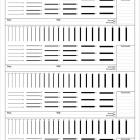
In my Ink log, compare the Penmaship writing samples to the Metropolitan writing samples - that will tell you the difference.  You can also look them up on the Goulet Pens nib nook tool, Anderson Pens nib tool, and on Jet Pens in the Kakuno writing samples.

Link to comment
Share on other sites

  • Replies 68
  • Created
  • Last Reply

Top Posters In This Topic

  • IanP2303

    27

  • LizEF

    17

  • InkyColors

    9

  • A Smug Dill

    8

Top Posters In This Topic

Posted Images

6 hours ago, IanP2303 said:

My gratitude knows no bounds, the nib sizes are significant. Beautiful black ink by the way, my Parker Quink Black Ink's colour isn't as strong at times, it looks like a grey ink occasionally.

I'm glad it helped.  I do love this ink.  I use it on envelopes (since it is waterproof) and to make sketches before using watercolors.  I use it in inexpensive pens like the Kaküno that are easy to take apart and clean.  I did have the orange version get into the engraving of a Sailor nib and it was hard to remove because the engraving is very fine - apparently finer than the bristles on a soft toothbrush.  I haven't had any problems with it in my Preras, Metropolitans and Kakünos.  The Kaküno writes well with this ink, but it does not look as "pretty" as the Metropolitan.  If you want the looks of the Metropolitan and the nib from the Kaküno you can always switch the nib.

Link to comment
Share on other sites

Are the Pilot Kakuno/Penmanship EF nibs generally scatchy? I have one Kakuno EF and it is rather scratchy. I'm wondering if this is expected or if I was just unlucky. My Prera/Metropolitan/Plumix F nibs are all very smooth writers. 

Link to comment
Share on other sites

3 minutes ago, WalterC said:

Are the Pilot Kakuno/Penmanship EF nibs generally scatchy? I have one Kakuno EF and it is rather scratchy. I'm wondering if this is expected or if I was just unlucky. My Prera/Metropolitan/Plumix F nibs are all very smooth writers. 

In the post I repeated below (see next), I didn't address the difference between "scratch" (a problem) and "feedback" (an attribute).  If you have doubt as to the difference or which one you're feeling, we should explore that.  In the meantime...  Someone else made a similar comment on reddit a while back, and I will copy my reply from that thread:


Quote

Note that a finer nib will always give you more feedback than a fatter nib (assuming both are properly tuned and equally polished). That's just the nature of the tiny tipping and narrower tines - they feel more and transmit more to your fingers.

So let's talk about your Kakuno nib and all the reasons it might feel scratchy. Please feel free to ask questions if you suspect any of these may be causing problems with your nib.

Ink

  • Inks can be lubricated (meaning they lubricate the nib) or not, and everything in between.

  • Spread: Some inks write a fat line, some write a skinny line, and others are in between. If your ink spreads, it may be that with a different ink (or different paper), you'd be happy with a larger nib (or just more happy with your EF).

  • In my profile, you will find links to a series of ink reviews I'm doing using the same nib as is in your Kakuno - I'm on ink #159 right now - so I know a lot about this nib and inks. :) You might want to use those reviews to find inks that will work best for you.

  • What ink are you using with the Kakuno (brand and name)?

Paper

  • Think of paper as a road and your nib as a wheel. If you've got a monster-truck sized wheel, you won't even notice the horse-sized pot-holes. But if you're on a skateboard, you'll fall in and break your neck. Same with your Japanese EF nib - it's gonna fall into every "pot-hole" in your paper.

  • Further, most paper these days isn't terribly friendly to fountain pen ink. That means the ink will soak in and spread out, making the line fatter than it would be on FP-friendly paper. If you've been using ordinary paper with your pen, you may discover that with FP-friendly paper, you'd be happy with a Japanese F (or western EF).

  • So, what sort of paper are you using?

Writing technique

  • A Japanese EF is more "sensitive" to writing technique than any larger nib, and less forgiving. Therefore, you need to pay more attention to pressure, elevation, and rotation:

  • Pressure can cause the nib to dig into the paper. It can spread the tines, letting the inside and outside edge to come into contact with the page (that's bad). Pressure is a subconscious / muscle-memory thing, so it requires conscious attention to retrain yourself. Relax your grip so that you're only holding on enough to control the pen - barely. Someone should be able to slip it out of your hand without any resistance. This will result in your handwriting getting worse before it gets better. It took me about 6 months to retrain my grip. You can also play a game with yourself of trying to write without letting the nib touch the paper. The idea here is to learn just how light a touch will work, and what it feels like, as a sort of training exercise.

  • Elevation: Ballpoints require one to write with the pen almost perpendicular to the page. Held in front of the knuckle where the index finger joins the hand. Fountain pens are designed to write with the pen at a shallower angle - behind that knuckle, or even resting on the web between the thumb and index finger. The nib is polished so that it's smooth when writing at the right angle, but may be scratchy when writing at too steep an angle.

  • Rotation: If you rotate the pen too far in either direction, it'll be resting mostly on one tine (if it were resting entirely on one tine, it wouldn't write). That can result in the outer edge of the leading tine, and the inner edge of the trailing tine cutting into the paper. These edges aren't polished and aren't meant to come into contact with the paper. A Japanese EF has a very small sweet spot, and if you don't hold the pen at the exact right rotation, you may get some of that scratchy feeling from the tine edges. The Kakuno's semi-faceted grip may encourage you to hold the pen in a way that angles the nib too far (given your particular grip). So don't be afraid to try rotating the nib and feed slightly once you find the best rotation, to make the grip help with said rotation.

Nib

  • While Pilot have great QC, no one is perfect. It's possible that your nib is flawed in some way. Checking and fixing the above items should always come first, because they won't damage anything, just fix it. But if you're absolutely certain you've done all you can in relation to the above, then you can check the following potential nib problems:

  • The slit isn't centered. That means one tine is larger than the other. This can require you to rotate the nib to far toward the smaller tine in order to get the pen to write, and that can expose those unpolished edges. If this is the problem, a new nib should solve it.

  • Diagonal slit - the cut goes at an angle between the tines. This can lead to the same problems as the non-centered slit. Only solution is a new nib.

  • Uneven tipping material - This is like the previous two, just a different cause - the blob of tipping is larger on one tine than another (the polishing or tipping process messed up). This might could be polished out, but it may need a new nib.

  • Misaligned tines - this is where one tine is lower than the other. The lower tine will dig into the paper when it trails. You know you have this problem if the pen scratches in one direction but is smooth in the other. You can fix this - see the instructions link below, and/or ask about it.

  • Stuff stuck between the tines: A magnified visual inspection will reveal whether you have this problem - but it usually makes the pen write fatter, so you'd probably notice. A shim of some sort can be used to get the stuff out.

  • Tines too tight: when this happens, the pen doesn't allow enough ink out, and since the ink is what lubricates the nib, it can feel scratchy even though that's not really what's happening. The problem is fairly easy to fix - see instructions and/or ask about it.

  • Nib just isn't polished enough - yes, you can polish a Japanese EF nib - I've done it. You'll need some 12,000 grit micromesh like the online FP stores sell. Then you'll need to read, watch and ponder the instructions before giving it a go. Do less than the instructions tell you - the nib has very little tipping material to work with. Think it out first, then go ahead cautiously. :)

  • In my opinion, if the ink, paper, and technique suggestions don't completely solve the scratchy feeling, unless there's a problem with your nib, you'll probably be happiest by polishing it a little further (perhaps even with mylar paper - sold by the same folks who sell the micromesh, get both if you think you want glassy smooth). If nothing else, this would tell you whether you can be happy with a nib this fine.

Now, there's no way I didn't forget something in all that, so please ask whatever questions you may have. The short answer is that you're not going to find anything that's just as fine as a Pilot steel EF but smoother. The Pilot gold EF will be slightly wetter and write a slightly fatter line, and may be a little bit smoother. But not guaranteed.


Link to comment
Share on other sites

5 minutes ago, WalterC said:

Are the Pilot Kakuno/Penmanship EF nibs generally scatchy? I have one Kakuno EF and it is rather scratchy. I'm wondering if this is expected or if I was just unlucky. My Prera/Metropolitan/Plumix F nibs are all very smooth writers. 

My Kaküno EF is very smooth, but that may be due to the ink I’m using. I haven’t tried many other inks in it. Maybe I was just lucky and got a good one🙂

Link to comment
Share on other sites

LizEF, thanks for the amazing dissertation!  I used Pilot cartridges in it, so the ink was Pilot/Namiki blue or blueblack. I have a fairly light hand. The paper used was Clairefontaine, so quite smooth and fountain pen friendly.  My next step is to find the pen and my magnifier and inspect. I can also try other inks that may be more lubricating or wet (aurora black, take sume, waterman blue?).

      I do not like scratchy or feedback. I have had vintage pens that are as fine and smoother. Honestly, the Pilot fines are fine enough for me, I just wanted to see what the EF was like.

      InkyColors, thanks for answer. What ink are you using?

Link to comment
Share on other sites

8 minutes ago, WalterC said:

LizEF, thanks for the amazing dissertation!

:) You're most welcome!


8 minutes ago, WalterC said:

I used Pilot cartridges in it, so the ink was Pilot/Namiki blue or blueblack. I have a fairly light hand. The paper used was Clairefontaine, so quite smooth and fountain pen friendly.

In my experience, Pilot ink lubricates Pilot pens very well.  And Clairefontaine is amongst the smoothest papers out there.  Throw in your light hand and either we're talking about the natural feedback, or something is indeed wrong with the nib.


9 minutes ago, WalterC said:

My next step is to find the pen and my magnifier and inspect. I can also try other inks that may be more lubricating or wet (aurora black, take sume, waterman blue?).

Good plan.  Of those three inks, I only have experience with Waterman Serenity Blue, and between it and the ordinary Pilot inks, Pilot Blue/Black has the best lubrication (based on my testing / reviews).  The best lubrication I've experienced is Herbin Bleu des Profondeurs.  FWIW, these are the inks I rated as having excellent lubrication:

  • Colorverse Extra Dimension
  • De Atramentis Document Blue
  • De Atramentis Document Urban Grey
  • De Atramentis Indigo Blue
  • Diamine German Exclusive Purple Rain
  • Diamine Midnight
  • Diamine Red Dragon
  • Graf von Faber-Castell Olive Green
  • Herbin Bleu des Profondeurs
  • KWZ Grey Plum
  • Noodler's Baystate Blue
  • Pilot Iroshizuku Tsuki-yo
  • Platinum Pigment Ink Carbon Black
  • Sailor Shikiori Yonaga
  • Visconti Blue
10 minutes ago, WalterC said:

I do not like scratchy or feedback. I have had vintage pens that are as fine and smoother.

I have used 12,000 micromesh to polish Pilot steel EF nibs (the very nibs we're discussing), so it can be done, but as you appear to know, the first step is to make sure the tines aren't misaligned.  It may also help to make the pen wetter - you'll have to determine whether that's needed.  Best wishes getting your nib to write as smoothly as possible. :)

Link to comment
Share on other sites

22 minutes ago, WalterC said:

LizEF, thanks for the amazing dissertation!  I used Pilot cartridges in it, so the ink was Pilot/Namiki blue or blueblack. I have a fairly light hand. The paper used was Clairefontaine, so quite smooth and fountain pen friendly.  My next step is to find the pen and my magnifier and inspect. I can also try other inks that may be more lubricating or wet (aurora black, take sume, waterman blue?).

      I do not like scratchy or feedback. I have had vintage pens that are as fine and smoother. Honestly, the Pilot fines are fine enough for me, I just wanted to see what the EF was like.

      InkyColors, thanks for answer. What ink are you using?

You’re welcome. There’s a sample earlier in the post showing nib sizes with ink.  I use my Kaküno pens with DeAtramentis Document and Archive ink.  I want inexpensive pens to keep in my sketching bag. 

Link to comment
Share on other sites

49 minutes ago, LizEF said:
  • De Atramentis Document Blue
  • De Atramentis Document Urban Grey
  • De Atramentis Indigo Blue

I’m wondering if I received bottles of Document Blue and Cyan from bad batches.  I have the other colors for mixing - fuchsia, yellow, and also have black and brown. They are all great. The 2 bottles of blue are so wet that they can only be used for mixing - and even then only if the amount of blue used is small.  It’s very frustrating since I was hoping to use the blue on its own in addition to mixing. I probably should have returned them.  Can anything be done if a bottle of ink is too lubricated?

Link to comment
Share on other sites

9 minutes ago, InkyColors said:

I’m wondering if I received bottles of Document Blue and Cyan from bad batches.  I have the other colors for mixing - fuchsia, yellow, and also have black and brown. They are all great. The 2 bottles of blue are so wet that they can only be used for mixing - and even then only if the amount of blue used is small.  It’s very frustrating since I was hoping to use the blue on its own in addition to mixing. I probably should have returned them.  Can anything be done if a bottle of ink is too lubricated?

They are very wet (the blues) and prone to spreading and bleed, so I doubt you got a bad batch (though I suppose it's possible).  You can reduce lubrication, and dry an ink by adding water.

Link to comment
Share on other sites

6 minutes ago, LizEF said:

They are very wet (the blues) and prone to spreading and bleed, so I doubt you got a bad batch (though I suppose it's possible).  You can reduce lubrication, and dry an ink by adding water.

Thank you. Does adding water work with inks like this that are pigment inks?  I thought the reason to use the thinner (when  you want a lighter color) that they sell was because adding water is not recommended. 

Link to comment
Share on other sites

15 minutes ago, InkyColors said:

Does adding water work with inks like this that are pigment inks?

All fountain pen inks are water based.  Adding water dilutes everything - the dye or pigment responsible for the color, ingredients that aid flow, ingredients that lubricate, biocides, etc.


16 minutes ago, InkyColors said:

I thought the reason to use the thinner (when  you want a lighter color) that they sell was because adding water is not recommended. 

The dilution fluid (not a "thinner" like paint thinner, though functionally, I suppose you can say it thins and is therefore a thinner) presumably maintains flow and lubrication properties while diluting the color.  And I'm sure De Atramentis would prefer you pay them rather than the water company.  But water can be added, and unless there's something wrong with your water, is generally safe - especially when you understand the consequences (drier, less lubrication, less concentrated biocide - if any was there to begin with).

Link to comment
Share on other sites

12 hours ago, InkyColors said:

I'm glad it helped.  I do love this ink.  I use it on envelopes (since it is waterproof) and to make sketches before using watercolors.  I use it in inexpensive pens like the Kaküno that are easy to take apart and clean.  I did have the orange version get into the engraving of a Sailor nib and it was hard to remove because the engraving is very fine - apparently finer than the bristles on a soft toothbrush.  I haven't had any problems with it in my Preras, Metropolitans and Kakünos.  The Kaküno writes well with this ink, but it does not look as "pretty" as the Metropolitan.  If you want the looks of the Metropolitan and the nib from the Kaküno you can always switch the nib.

Waterproof ink? I don't know much about inks, do you mind telling me more about this ink?


Thanks,

Ian

EF nibs!!!

Link to comment
Share on other sites

1 hour ago, LizEF said:

:) You're most welcome!


In my experience, Pilot ink lubricates Pilot pens very well.  And Clairefontaine is amongst the smoothest papers out there.  Throw in your light hand and either we're talking about the natural feedback, or something is indeed wrong with the nib.


Good plan.  Of those three inks, I only have experience with Waterman Serenity Blue, and between it and the ordinary Pilot inks, Pilot Blue/Black has the best lubrication (based on my testing / reviews).  The best lubrication I've experienced is Herbin Bleu des Profondeurs.  FWIW, these are the inks I rated as having excellent lubrication:

  • Colorverse Extra Dimension
  • De Atramentis Document Blue
  • De Atramentis Document Urban Grey
  • De Atramentis Indigo Blue
  • Diamine German Exclusive Purple Rain
  • Diamine Midnight
  • Diamine Red Dragon
  • Graf von Faber-Castell Olive Green
  • Herbin Bleu des Profondeurs
  • KWZ Grey Plum
  • Noodler's Baystate Blue
  • Pilot Iroshizuku Tsuki-yo
  • Platinum Pigment Ink Carbon Black
  • Sailor Shikiori Yonaga
  • Visconti Blue

I have used 12,000 micromesh to polish Pilot steel EF nibs (the very nibs we're discussing), so it can be done, but as you appear to know, the first step is to make sure the tines aren't misaligned.  It may also help to make the pen wetter - you'll have to determine whether that's needed.  Best wishes getting your nib to write as smoothly as possible. :)

What is a micromesh and can you teach me how to polish a nib? I believe the term polish here is to make the nib smoother, no? 


Thanks,

Ian

EF nibs!!!

Link to comment
Share on other sites

10 minutes ago, IanP2303 said:

What is a micromesh and can you teach me how to polish a nib?

Micromesh is an abrasive paper, like sandpaper, but smoother.  Here's a link to the 12,000 grit version that Goulet Pens (and other companies) sell.  Note that the "grit" or grades are not identical between types of sandpaper, and so I would strongly recommend making sure you're getting yours from a fountain pen retailer, or at least that you know you're getting the equivalent.


As for how, I personally wouldn't endeavor to teach someone, but there are lots of resources out there, and I recommend reading and watching as many as you can find.  Also note that it's important to do things in the right sequence (see the series below from The Pen Habit):

http://www.richardspens.com/pdf/workshop_notes.pdf

http://www.richardspens.com/ref/nibs/beginners.htm

The Pen Habit Videos:

I think one should do a search, watch and read lots and lots, and think about what you watch & read - don't just trust it. Consider how they match up with what Richard Binder (the single most recognized expert in our tine) has to say. Then proceed with caution.


10 minutes ago, IanP2303 said:

I believe the term polish here is to make the nib smoother, no? 

Correct.

Link to comment
Share on other sites

52 minutes ago, IanP2303 said:

Waterproof ink? I don't know much about inks, do you mind telling me more about this ink?


I am certainly not an expert on inks. I would recommend searching online for videos by Brian Goulet of The Goulet Pen Company.  He has videos that cover everything you need to know about fountain pens and inks.
There are some inks that are dye-based and some that are pigment inks. DeAtramentis Document inks are made with nano-pigments (I think) and are safer to use in pens than some of the pigment inks with larger particles that can clog pens. (Sailor also makes a few inks that are in this category.)  You need to clean your pens more frequently when using pigment inks. I use them to do sketches that will be watercolored later and I use them in one of my journals that I hope to keep and wouldn’t want to be damaged by water or light. Some dye inks can fade when exposed to light and this is something to consider if you are doing artwork that will be displayed.  Most of the time dye inks are fine and they are the inks that I use most often on a day-to-day basis.  
I haven’t been using fountain pens as long as most of the people on this forum. I have learned a great deal by searching and reading here on fountain pen network. Goulet’s videos are also very helpful.  Good luck with your pen adventures. Learning new things is part of the fun. 

Link to comment
Share on other sites

1 hour ago, LizEF said:

Micromesh is an abrasive paper, like sandpaper, but smoother.  Here's a link to the 12,000 grit version that Goulet Pens (and other companies) sell.  Note that the "grit" or grades are not identical between types of sandpaper, and so I would strongly recommend making sure you're getting yours from a fountain pen retailer, or at least that you know you're getting the equivalent.


As for how, I personally wouldn't endeavor to teach someone, but there are lots of resources out there, and I recommend reading and watching as many as you can find.  Also note that it's important to do things in the right sequence (see the series below from The Pen Habit):

http://www.richardspens.com/pdf/workshop_notes.pdf

http://www.richardspens.com/ref/nibs/beginners.htm

The Pen Habit Videos:

I think one should do a search, watch and read lots and lots, and think about what you watch & read - don't just trust it. Consider how they match up with what Richard Binder (the single most recognized expert in our tine) has to say. Then proceed with caution.


Correct.

I will check it out, thanks a lot! You have been most helpful!


Thanks,

Ian

EF nibs!!!

Link to comment
Share on other sites

16 minutes ago, InkyColors said:

I am certainly not an expert on inks. I would recommend searching online for videos by Brian Goulet of The Goulet Pen Company.  He has videos that cover everything you need to know about fountain pens and inks.
There are some inks that are dye-based and some that are pigment inks. DeAtramentis Document inks are made with nano-pigments (I think) and are safer to use in pens than some of the pigment inks with larger particles that can clog pens. (Sailor also makes a few inks that are in this category.)  You need to clean your pens more frequently when using pigment inks. I use them to do sketches that will be watercolored later and I use them in one of my journals that I hope to keep and wouldn’t want to be damaged by water or light. Some dye inks can fade when exposed to light and this is something to consider if you are doing artwork that will be displayed.  Most of the time dye inks are fine and they are the inks that I use most often on a day-to-day basis.  
I haven’t been using fountain pens as long as most of the people on this forum. I have learned a great deal by searching and reading here on fountain pen network. Goulet’s videos are also very helpful.  Good luck with your pen adventures. Learning new things is part of the fun. 

Yes, learning new things is part of the fun. I use my fountain pens to write and polish my handwriting on a daily basis, which kind of ink is best for long writing sessions according to you?


Thanks, 

Ian

EF nibs!!!

Link to comment
Share on other sites

7 minutes ago, IanP2303 said:

Yes, learning new things is part of the fun. I use my fountain pens to write and polish my handwriting on a daily basis, which kind of ink is best for long writing sessions according to you?

I think it depends on which ink works best in your pen and which colors make you happy. Inks look and behave differently in different pens. It’s trial and error until you find the combination that you like. 

Link to comment
Share on other sites

2 minutes ago, InkyColors said:

I think it depends on which ink works best in your pen and which colors make you happy. Inks look and behave differently in different pens. It’s trial and error until you find the combination that you like. 

I agree, I am just using the most basic colours, royal blue and black. I love Apache Sunset, though the orange colour isn't as beautiful on the brown paper I am use to write letters, that's why I didn't buy it. I don't have a flex nib to show the different shades of the ink. Any good and beautiful inks I can try?

EF nibs!!!

Link to comment
Share on other sites

Create an account or sign in to comment

You need to be a member in order to leave a comment

Create an account

Sign up for a new account in our community. It's easy!

Register a new account

Sign in

Already have an account? Sign in here.

Sign In Now


  • Most Contributions

    1. amberleadavis
      amberleadavis
      43972
    2. PAKMAN
      PAKMAN
      35579
    3. inkstainedruth
      inkstainedruth
      31334
    4. Ghost Plane
      Ghost Plane
      28220
    5. Bo Bo Olson
      Bo Bo Olson
      27747
  • Upcoming Events

    No upcoming events found
  • Blog Comments

    • stylographile
      Awesome! I'm in the process of preparing my bag for our pen meet this weekend and I literally have none of the items you mention!! I'll see if I can find one or two!
    • inkstainedruth
      @asota -- Yeah, I think I have a few rolls in my fridge that are probably 20-30 years old at this point (don't remember now if they are B&W or color film) and don't even really know where to get the film processed, once the drive through kiosks went away....  I just did a quick Google search and (in theory) there was a place the next town over from me -- but got a 404 error message when I tried to click on the link....  Ruth Morrisson aka inkstainedruth 
    • alkman
      There is still chemistry for processing regular chrome (positive) films like Kodak Ektachrome and Fuji Velvia, but Kodachrome was a completely different and multistep beast. 
    • Ceilidh
      Ah, but how to get it processed - that is the question. I believe that the last machine able to run K-14 (Kodachrome processing) ceased to operate some 15 or so years ago. Perhaps the film will be worth something as a curiosity in my estate sale when I die. 😺
    • Mercian
      Take a lot of photos!   If the film has deteriorated or 'gone off' in any way, you can use that as a 'feature' to take 'arty' pictures - whether of landmarks, or people, or whatever.
  • Chatbox

    You don't have permission to chat.
    Load More
  • Files


×
×
  • Create New...