Jump to content

Suggestions for a Long-Lived Blue and Blue-Black?


BigBlot

Recommended Posts

I mentioned the possible effect of common fillers on inks in another thread here:

I'm generally more concerned with paper since it's one of my favorite studies. I try not to get too involved with it in pen/ink discussions because it is the elephant in the room and I don't want to be a party pooper. It seems that mostly cheap wood papers are preferred for fountain pen writing. I assume because of the greater choice, particularly in regards to surfacing. Most wood papers for writing fall into the "acid free" category these days. To my sensibilities that's not necessarily good, because it does not mean they are neutral or non-reactive. It just means they are not acidic. To be archival, a paper needs to be neutral. Archival papers are generally rag, cotton, linen, or sometimes some other fibers which do not contain lignin when processed. It is also not desirable to have a filler, such as is generally used in common consumer papers, although fillers serve many useful purposes.


Calcium carbonate is generally added at the wet end of the fourdrinier, but I believe it is also used in coatings which are sprayed before the calendar process after it comes off the web. I am not a chemist, but I have a strong suspicion it reacts with acidic inks like iron gall. I've read that it is certainly a problem with some printing processes.


An internet search for paper fillers and paper chemistry will bring up a lifetime of reading. Here is a quick description of the difference between archival and acid free: https://en.wikipedia.org/wiki/Acid-free_paper#Archival_paper

Here is a professional dissertation on fillers, This will give an idea of the complexity of the subject: https://bioresources.cnr.ncsu.edu/resources/fillers-for-papermaking-a-review-of-their-properties-usage-practices-and-their-mechanistic-role/


I hope I'm not too much of a wet blanket here. Personally I mostly use 100% cotton papers or, my favorite, 75%cotton/25% linen. I find the ones I use are not what other people would call "fountain pen friendly", but I adapt the pen/ink combination to make it work for me. I totally understand why one would use wood papers. They are cheap, have nice surfaces, and ageing qualities are often very good, even if not the best.


Link to comment
Share on other sites

  • Replies 60
  • Created
  • Last Reply

Top Posters In This Topic

  • yazeh

    12

  • arcfide

    10

  • cellmatrix

    6

  • BigBlot

    5

Top Posters In This Topic

Posted Images

25 minutes ago, OleJuul said:

I hope I'm not too much of a wet blanket here. Personally I mostly use 100% cotton papers or, my favorite, 75%cotton/25% linen. I find the ones I use are not what other people would call "fountain pen friendly", but I adapt the pen/ink combination to make it work for me. I totally understand why one would use wood papers. They are cheap, have nice surfaces, and ageing qualities are often very good, even if not the best.


Do you know of any academic articles that focus on ink and paper interactions for archival purposes? After all, one of the reasons that many makers shifted to the PCC/Calcium Carbonate methods was not only to address things like whiteness and brightness, but also to get away from acidic papermaking that resulted in the well-known degradation of many papers in the late 19th and early 20th centuries. Even if the color of the inks on those papers was okay, the paper itself degraded to such a rate that it didn't matter if the ink was fine. 


I'm having trouble sourcing any good academic scholarship on the interaction of inks with newer alkaline or pH-neutral papers. There's lots of discussion on older acidic papers and the like, but they often don't take into account the modern ink chemistries. 


For instance, inks like Waterman and the IG inks are acidic or tend towards that direction, but Herbin inks and a couple others tend to be close to pH-neutral, while many of the Japanese inks tend to be highly alkaline, and have been for a while, as far as I can tell. Many of the standard Sailor, Platinum, and Pilot inks are surprisingly alkaline. What affect will that alkalinity have on the various papers and how will the various papers affect those inks which are very different in their chemistries? I haven't been able to find anything on this, and it looks like you've seen some stuff, so I'd love to get some information on this. 


Then of course, there are the various claims from various manufacturers, and we have to wonder how true they are or are not. Kokuyo actually puts "archival grade" labeling on their papers. Tsubame claims that their Foolscap paper is archival. Apica used to advertise, as far as I can figure, their current C.D. medium weight writing paper as "1000 year" paper for its archival properties, though they don't have much to say on their A.Silky paper in this respect. Midori is somewhat silent in this regard to both their Cream writing paper and their Cotton paper. 


Obviously, there is widely available cotton paper in loose-leaf format that works well, but it's somewhat difficult to find such paper in notebooks. Do you know of any good sources that have the same build quality as some of the better notebooks that are out there right now commonly in use from Europe, America, and Japan? 

Link to comment
Share on other sites

I'm sorry to say that I have little academic information on paper/ink interaction. There is a well known problem with calcium carbonate in the printing industry, but it concerns effects on the printing process and equipment and they never seem to talk about the ink as such. See here, for example https://the-print-guide.blogspot.com/2010/12/calcium-carbonate-problem-with-better.html  Also with iron gall and paper, the academic concern seems to be historical preservation and what the ink does to the paper, and not the other way around. eg. this paper. For storage considerations there is a little note here which indicates that some dyes are sensitive to an alkaline environment. https://www.universityproducts.com/buffered-vs-unbuffered


I think one problem we're running into is that the use of ink in fountain pens is microscopic in relation to other types of use.


Link to comment
Share on other sites

1 hour ago, OleJuul said:

I'm sorry to say that I have little academic information on paper/ink interaction. There is a well known problem with calcium carbonate in the printing industry, but it concerns effects on the printing process and equipment and they never seem to talk about the ink as such. See here, for example https://the-print-guide.blogspot.com/2010/12/calcium-carbonate-problem-with-better.html  Also with iron gall and paper, the academic concern seems to be historical preservation and what the ink does to the paper, and not the other way around. eg. this paper. For storage considerations there is a little note here which indicates that some dyes are sensitive to an alkaline environment. https://www.universityproducts.com/buffered-vs-unbuffered


I think one problem we're running into is that the use of ink in fountain pens is microscopic in relation to other types of use.


That's about what I was able to find. It's not clear to me just how big of an issue it is with most of the fountain pen papers. I think that most of the higher end papers are lignin free, and the papers that I have read on IG ink preservation suggest that the calcium carbonate may have the least negative effect on IG inks while still preserving the paper's integrity, but that doesn't fully address the issue of what happens with other inks of different pH levels. 

Link to comment
Share on other sites

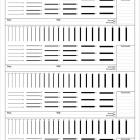
If it might help: here is a fade test I'm doing on a non-wood paper, curtesy of Ole.  It is surprising how cotton/linen papers absorb the ink and give it a different character:: 

The blob of Apache Sunset,  was priming the feed mishap and I was too lazy to redo the whole experiment...

Interesting was how General of the Armies, which dries to sea glass green and over time to blue changed right away.  And look how dark is Scabiosa.


372022600_FadetestCotton-Irongall-bulletproof1.jpeg.eab87ffa6c40ba1525501db3f609cff2.jpeg


Note how Baystate blue is fading, yet Scabiosa is darkening.....

1634462065_CottonPaper-Light-test.thumb.jpeg.4c4598dd337b12e2b9733f3b93eb32fa.jpeg

Link to comment
Share on other sites

Has the nature of the fillers used in cheap paper changed significantly in the last 50 or so years? I'm asking because I'm lazy and a little tired (I just skimmed through the Fillers for papermaking text and although I got answers as to why they are used for and their properties, the authors don't seem to address this clearly).


By the way, OleJuul, thank you for the link.  I think this discussion is interesting, even though we are moving away from the OPs question. Or are we?

Link to comment
Share on other sites

10 minutes ago, dan in montreal said:

Has the nature of the fillers used in cheap paper changed significantly in the last 50 or so years? I'm asking because I'm lazy and a little tired (I just skimmed through the Fillers for papermaking text and although I got answers as to why they are used for and their properties, the authors don't seem to address this clearly).


By the way, OleJuul, thank you for the link.  I think this discussion is interesting, even though we are moving away from the OPs question. Or are we?


I short, the answer is, yes, fillers have changed. That link above documents the move, but if you do some searching elsewhere, you can also find evidence of the shift. The big shift appears to have happened somewhere between the 1960's and the 1980's, with most of the big transition clearly happening by the 1980's. Before the 1980's, Acid-free, pH-neutral paper was not nearly as prevalent. From the 19th and early 20th centuries it appears that a clay-based filler was the most common, being used with an acid-based papermaking process. By the 1980's, this shift towards alkaline papermaking had happened and the predominant filler shifted from clay to calcium carbonate, with calcium carbonate now accounting for the vast majority of filler used in most of the writing applications from what I can tell. But yes, the authors address this in that link. 


Apica actually made a fairly strong advertising push in the 80's around calcium carbonate based paper. If you look for old advertisements for their "1000 year" paper, you'll find that they discuss the calcium carbonate filling that they are using, the benefits, and why they switch to it. Among the benefits, which is corroborated by the link above, is a smooth writing surface, whiter paper, and pH neutral or alkaline buffering. This was the same time that they released their C.D. line of papers which used this paper. Apica is a part of the Oji group, and they provide the paper manufacturing technology, which includes their new A.Silky paper. 


If you look at Tsubame, who has been making notebook paper for a very long time, you can find some interviews with their family regarding the history of the paper, which was made originally by Jujo paper (now Nippon group). They make reference to the "slow dry times" of some of the papers at the time (which would suggest more clay content based on the link given above) and their attempts to replicate a more absorbent paper such as was coming from overseas at the time (Foolscap paper, which I believe had significant rag content and thus would have been quite absorbent). Over time, they suggest that the main change that has occurred to the paper is that they whitened the shade in response to consumer demand for whiter paper, but without the use of fluorescent dyes or other such brighteners. This would also lead me to think that calcium carbonate would be a base in that paper, even if it was clay before, because of the need for whiter paper.


Why is Precipitated Calcium Carbonate (PCC) Preferred in Paper | Minerals Technologies Inc.


It's actually pretty hard to find papers that are historically linked to before the 1980's. Midori MD, for instance, makes a link, but if you read their site, you'll find that the original paper they used isn't really around anymore, as their MD Cream and Cotton papers are both post-2006 papers. Likewise, LIFE sourced their paper in the early 2000's and I can't find much provenance beyond that. Apica and Tsubame both have long standing paper lines that we can trace well, as does Kokuyo, but their popular papers are newer formulations, though Kokuyo claims archival qualities expressly in a few of their papers, particularly their MIO and CYO-BO papers and their Campus line.


The cotton paper makers seem to have a stronger link, coming from the U.S. and Europe. Even then, it's hard to tell. 


Additionally, a number of the requirements I've read for archival papers demands that they have an alkaline buffer in them, which is almost certainly calcium carbonate in most of the cases. Strathmore's page has a lot of discussion about archival features that they have, and Southworth paper is acid and lignin free as well as including some cotton content. Crown Mills and G. Lalo both have cotton archival quality paper I think. But even this paper is likely to have shifted a bit in the pursuit of whiter paper. I believe Clairefontaine is ECF/TCF and does not use brighteners or the like in their paper. Here's a link that shows that in the 70's and 80's Clairefontaine basically moved to pH-neutral paper with calcium carbonate:


Ecology & Environment - Clairefontaine - Fournitures scolaires, artistiques et bureau


I suspect a very similar trend with most of the rest of Europe and America. Here's a page on Strathmore mentioning Calcium Carbonate, which is likely used in their papers:


What is the Difference Between Acid-Free and Archival? - Strathmore Artist Papers


As for whether this is moving away from the original question, I think it's actually quite relevant. Paper is considered one of the more significant parts of the "long-lived" equation, and probably even more so than the ink. If kept in good archival conditions with an appropriate ink that is relatively stable, then you can probably expect good results, but with that same ink on paper that is not archival or acid-free, then the paper itself can break down even in storage, requiring intervention in order to reduce or stop the paper from actively destroying itself. As for long-lived blue and blue black inks, I do think IG is an appropriate choice, but paper makes a difference with all of these inks. If you do fade and water resistance tests, you'll quickly discover that more absorbent paper has a tendency to hold the ink better when exposed to moisture. Drier inks are more viscous and thus will have a harder time penetrating into the ink resistant papers, and so they will get less into the fibers. This has the effect of reducing the total amount of ink that gets into the page, but also has the effect of creating higher amounts of shading. That shading might be desirable by some for its appearance, but it is a detriment to longevity, because the shading means that less ink is getting applied in the lighter areas. With a dry ink like Salix or Scabiosa, on those shaded light areas, not a lot of IG content is getting embedded into the page at those points, so once the ink leaves there, you'll get a much lighter grey line. I suspect that the absorbency of the paper has more to do with things once you get passed paper that eats itself and doesn't have chlorine and other sorts of things in it. Cotton paper is very absorbent, and most cotton paper isn't filled with the fillers that keep the paper ink resistant in the same way that other papers are. 


Inks like Parker Quink or standard black inks are surprisingly water resistant on absorbent paper, but not nearly so much on ink resistant paper.


Still, 100% cotton paper with fade-resistant pigmented inks (carbon being the best) is without a doubt the best known archival combination. 

Link to comment
Share on other sites

10 hours ago, dan in montreal said:

. . .

By the way, OleJuul, thank you for the link.  I think this discussion is interesting, even though we are moving away from the OPs question. Or are we?


As @arcfide suggests, it's mostly the paper that will determine the longevity. So yes, I guess we're on topic. :)

Link to comment
Share on other sites

This is from some notes I took with a MB Slimline in 1995 using, I think MB Blue-Black ink, They were taken in an A7 size notebook with very tiny handwriting, and they have survived rather well so far.

Far better than the MasPar supercomputer they were taken for.

Edited: I had writtem MadPar instead of MasPar. What was I thinking?


Notes_from_1995.thumb.jpg.acf32388ab09f40b9a4c0cfbd0e1b325.jpg

If you are to be ephemeral, leave a good scent.

Link to comment
Share on other sites


I wrote in a journal in the late 80s with a Sheaffer Targa using Sheafer blue ink (I still have 1/2 the bottle!) and Parker black and both have held up well.


I tested some inks in the sun in a south facing window and most of them did OK. I like to use carbon ink and some of Noodlers for important things like a journal. They do tend to clog some of my pens so I have been experimenting with mixing them so they flow better and they seem to still be waterproof at least.  BSB faded away.


My late dad used a fountain pen a lot when he was in the Navy during WW2 and wrote home almost every day.  My grandmother saved all his letters and postcards and he scanned them in 20 years ago. He used a couple of different colors but mostly blue. There is some fading on some of the letters but all readable. The paper quality is not the best, thin. My grandmother put them in a scrap book which was made of cheap paper and not acid free so you see some yellow that came from that.


He told me that some sailors bought some of the first ball point pens. They were expensive and stopped working after a while so he never bothered getting one.  He also used a pencil and since he was the radioman on one ship a all caps typewriter.


95.thumb.jpg.0c5064cc0ac6f409b2147f27920933d8.jpg


Here's an older article on writing inks:


https://pubs.acs.org/doi/abs/10.1021/ed021p413


Link to comment
Share on other sites

2 hours ago, txomsy said:

This is from some notes I took with a MB Slimline in 1995 using, I think MB Blue-Black ink, They were taken in an A7 size notebook with very tiny handwriting, and they have survived rather well so far.

Far better than the MasPar supercomputer they were taken for.

Edited: I had writtem MadPar instead of MasPar. What was I thinking?


I worked in a lab in the 90s and we had a MasPar computer for RNA folding computations. The machine was a beast and noisy. At least it was in a separate room.


Link to comment
Share on other sites

@thorn thanks for sharing your late father's letter. Moving to put it mildly. 

I hazard a guess that it was written by an iron gall, probably Cross. :)


Link to comment
Share on other sites

5 minutes ago, yazeh said:

@thorn thanks for sharing your late father's letter. Moving to put it mildly. 

I hazard a guess that it was written by an iron gall, probably Cross. :)


I don't think it was iron gall ink. They had dye inks then. Here's an example of a green ink one and blue that is a little brighter. There are a few with red ink too.


He wrote over 400 letters. I have been transcribing them over time when I get time. I wonder if he talked about fountain pens. I know he wrote about trouble he had with his watches, I jeep ran over his watch once.  I do have a red top Sheaffer pen that was his. I'm not sure when it was made. I should try to ID it, I'm not sure where I put it.


319.thumb.jpg.b7fdbdbe9a89684e25b70e3c40070a34.jpg


419.thumb.jpg.bed9868b114adb701be9f55bc36b67b6.jpg


Link to comment
Share on other sites

Some pretty impressive resilience in those inks from the '40's.  Since we've got other colors...


For me, the most impressively durable ink I've encountered in person was used to mark an entry in the 1913 (I think it was) section of the archives of the court in the county I practice in.  A man had committed such a vile and despicable act (no, you really don't want to know) that the locals stormed the jail, dragged him out, and hanged him from a local railway bridge.  The annotation of that in the record book is still in bright *red* ink.  I'm pretty confident that whatever went into that red ink, like the blues and greens above, would probably not pass OSHA muster today :P


But, as per the topic ... Pigmented inks + cotton paper = going to be around for longer than any of us on the board here will be around for...


Also, some of those Medieval books were written on velum, which is a whole different beast all together. 

Imagination and memory are but one thing which for diverse reasons hath diverse names. -- T. Hobbes - Leviathan

Link to comment
Share on other sites

Assuming that you get halfway decent paper, and a decent ink that isn't fundamentally unstable and subject to fading, then, under archival conditions where you store the page outside of excessive heat, humidity, and light, then I think most people will get a very long time out of those documents, much longer than most people worry about when it comes to preservation. Where "long lived" comes into play is more extreme conditions, such as when you are dealing with inclement weather, attempts at forgery or destruction of the ink, or where you need to have the work displayed in the open for long periods of time (artwork), or when you start talking on the order of multiple centuries of perfect preservation even under less than ideal conditions. At that point, the tougher inks start to pull away. Still, if you don't have good paper and containers for storage, then nothing else really matters. You can find examples of old documents written in the typical inks of the turn of the 20th century that have very clear ink written on them (not necessarily IG ink), but where the paper is literally crumbling. You can preserve most inks through proper storage, but it's very hard to save paper from destroying itself if it isn't construction/made with that in mind. 


Assuming that you can keep your pages out of the wet, then most dye-based inks of a suitable range of stability on reasonably archival paper will probably do fine. Where IG inks start to make a difference is that they are predictably resilient to bad water dumps. They will degrade because of it, but they, in the moment, remain more usable as documents when they get wet than dye-based inks, which smudge badly when wet (for the most part). But even IG needs to be kept stored in good condition if you don't want the ink to deteriorate faster than normal. I think the archivists and preservationists specializing in IG documents have noted that many of the documents that show the worst degradation are those which at some point or another in their history suffered water damage. They are still around, which is a testament to the durability of IG inks, but that doesn't mean they will just shrug off water: there is a price to pay. 


Carbon ink can very easily reach into 1000's of years worth of longevity, but the real limiting factor there, is, again, the paper. If you can manage to keep the paper preserved in good condition without being exposed to all the things that like to kill paper for that amount of time, then nothing beats carbon inks. On the other hand, if you had the choice between going with a dye-based ink and good paper or carbon ink and a mediocre paper, I'd pick the dye-based ink and good paper most times. 


And it's worth reiterating that the more the paper highlights the shading and sheen of an ink, the less likely it is to give your inks the best chance of longevity on the page. Papers that permit the inks to stain the cellulose of the page will help the inks last longer. 

Link to comment
Share on other sites

7 minutes ago, arcfide said:

Assuming that you get halfway decent paper, and a decent ink that isn't fundamentally unstable and subject to fading, then, under archival conditions where you store the page outside of excessive heat, humidity, and light, then I think most people will get a very long time out of those documents, much longer than most people worry about when it comes to preservation. Where "long lived" comes into play is more extreme conditions, such as when you are dealing with inclement weather, attempts at forgery or destruction of the ink, or where you need to have the work displayed in the open for long periods of time (artwork), or when you start talking on the order of multiple centuries of perfect preservation even under less than ideal conditions. At that point, the tougher inks start to pull away. Still, if you don't have good paper and containers for storage, then nothing else really matters. You can find examples of old documents written in the typical inks of the turn of the 20th century that have very clear ink written on them (not necessarily IG ink), but where the paper is literally crumbling. You can preserve most inks through proper storage, but it's very hard to save paper from destroying itself if it isn't construction/made with that in mind. 


Assuming that you can keep your pages out of the wet, then most dye-based inks of a suitable range of stability on reasonably archival paper will probably do fine. Where IG inks start to make a difference is that they are predictably resilient to bad water dumps. They will degrade because of it, but they, in the moment, remain more usable as documents when they get wet than dye-based inks, which smudge badly when wet (for the most part). But even IG needs to be kept stored in good condition if you don't want the ink to deteriorate faster than normal. I think the archivists and preservationists specializing in IG documents have noted that many of the documents that show the worst degradation are those which at some point or another in their history suffered water damage. They are still around, which is a testament to the durability of IG inks, but that doesn't mean they will just shrug off water: there is a price to pay. 


Carbon ink can very easily reach into 1000's of years worth of longevity, but the real limiting factor there, is, again, the paper. If you can manage to keep the paper preserved in good condition without being exposed to all the things that like to kill paper for that amount of time, then nothing beats carbon inks. On the other hand, if you had the choice between going with a dye-based ink and good paper or carbon ink and a mediocre paper, I'd pick the dye-based ink and good paper most times. 


And it's worth reiterating that the more the paper highlights the shading and sheen of an ink, the less likely it is to give your inks the best chance of longevity on the page. Papers that permit the inks to stain the cellulose of the page will help the inks last longer. 


Certainly food for thought.  Right now my journals are all Tomoe River 52g paper.  I try not to use any inks that don't absorb to the extent that they can be smudged off the surface with a finger--I avoid such inks.  Because the paper has such low absorbency.  But beyond that, I do wonder how that paper will survive over the years.

“I admit it, I'm surprised that fountain pens are a hobby. ... it's a bit like stumbling into a fork convention - when you've used a fork all your life.” 

Link to comment
Share on other sites

12 hours ago, thorn said:


I worked in a lab in the 90s and we had a MasPar computer for RNA folding computations. The machine was a beast and noisy. At least it was in a separate room.


I was at the EMBL-EBI, our MasPar came from EMBL at Heidelberg and was used to run Smith and Waterman searches until I started reprogramming it for my pet projects. That was around '94-'95.


That sample above provides substance to this discussion.


The notes were intended to last. The MasPar was a new computer paradigm that could have lasted and thus I might have needed my notes for a long time. Other earlier notes on other topics are still useful (I still have to access some Fortran IV code, and that's '60s-'70s). There are reasons to ensure permanence, sometimes beyond a lifetime. Specially to be able to revive old, long forgotten knowledge.


On the other hand, against our expectations those computers didn't catch up and soon passed away. We are still far from reaching those dimensions again. So those notes didn't need to last in the end (and I'm recycling that little notebook). Most of us may look for permanent ink and probably do not really need it, or will never actually need it.


And yet, as things go one of these days computers will reach that level again. Our MasPar had 16000 or 32000 CPUs (can't remember), modern computers easily have a hundred CPUs, so we are moving in that direction. Which means that even though now it seems those notes became useless a few years after I took them (MasPar passed away in 1996 I think), the same principles may become mainstream again and then the notes may become interesting once more.


Which comes to show that one never knows for sure if something has become obsolete and uninteresting, and that knowledge/data once deemed worthless may turn out appealing again later against all expectations, and then you'd miss if it wasn't recorded in permanent ink.


That's why I, personally, prefer to use permanent ink. I know most of my notes (and probably all of them) will likely be absolutely worthless once I retire (I won't likely have any use for them any more, beyond nostalgia). But some others might still have an interest. And I have no way to know in advance which, if any, will be worth preserving. As it is, it is all the same to me to use one ink or other, so why not settle for permanent inks anyway and not have to worry?


If you are to be ephemeral, leave a good scent.

Link to comment
Share on other sites

6 minutes ago, txomsy said:

As it is, it is all the same to me to use one ink or other, so why not settle for permanent inks anyway and not have to worry?


At the moment, at work, the regulations stipulate that I should make official notes etc. using indelible ink.  The colour is also supposed to be black!  I had known about the black colour requirement since fellow staff members will at times, shout foul if my ink is blue-black.  However, I had not really paid attention to permanence.  I didn't know that the ink permanence requirement was explicitly stipulated.  


It was not until several months ago, I was reflecting on a few legal cases that came up in my department and our records would be central to the provided evidence.  At times, records a decade or more old would be needed.  Files would be stored at a facility, but you know, flooding can occur etc. Not to mention spills by others when using these file.  It was this forum (thanks y'all) that made me think that I should be switching to a permanent ink for work.


To my surprise, they actually work well and I've found myself sticking to them as a result.  The ink choices are less, but I actually don't mind this since it's less distracting for me and I'm one of those who likes uniformity, rather than too much variety.  I also prefer conservative colours and styles.

Link to comment
Share on other sites

1 hour ago, maclink said:


At the moment, at work, the regulations stipulate that I should make official notes etc. using indelible ink.  The colour is also supposed to be black!  I had known about the black colour requirement since fellow staff members will at times, shout foul if my ink is blue-black.  However, I had not really paid attention to permanence.  I didn't know that the ink permanence requirement was explicitly stipulated.  


It was not until several months ago, I was reflecting on a few legal cases that came up in my department and our records would be central to the provided evidence.  At times, records a decade or more old would be needed.  Files would be stored at a facility, but you know, flooding can occur etc. Not to mention spills by others when using these file.  It was this forum (thanks y'all) that made me think that I should be switching to a permanent ink for work.


To my surprise, they actually work well and I've found myself sticking to them as a result.  The ink choices are less, but I actually don't mind this since it's less distracting for me and I'm one of those who likes uniformity, rather than too much variety.  I also prefer conservative colours and styles.

Very sensible and that is something I do as well. A good permanent black, blue/black or blue is all we need really. 

Link to comment
Share on other sites

5 minutes ago, shostakovich said:

A good permanent black, blue/black or blue is all I need really. 


Fixed it!

Add lightness and simplicate.


Link to comment
Share on other sites

Create an account or sign in to comment

You need to be a member in order to leave a comment

Create an account

Sign up for a new account in our community. It's easy!

Register a new account

Sign in

Already have an account? Sign in here.

Sign In Now


×
×
  • Create New...