Jump to content

Cracked Barrel Repair


DrAtomic

Recommended Posts

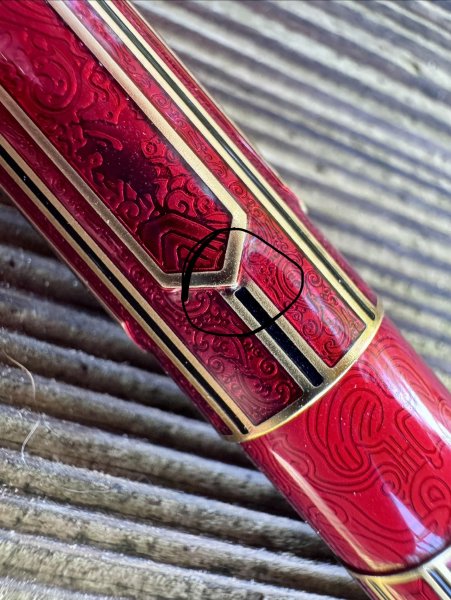
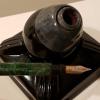
I took a chance on a Visconti Rembrandt on a popular auction site and upon arrival (from a distant land) I found it had two hairline cracks in the barrel where the nib section screws in. It shouldn't have happened as there is a threaded metal insert in the barrel for the nib section to screw into, but none the less, the cracks are there. The seller has offered to compensate for repairs, but I'm not sure who does such work. I'm not opposed to doing the work myself, but I'm not sure I want to tackle this one.

Any tips on repairing hairline cracks?

Thanks for any assistance on this.

post-149092-0-57470100-1556266681_thumb.jpg

Edited by DrAtomic
Link to comment
Share on other sites

  • Replies 15
  • Created
  • Last Reply

Top Posters In This Topic

  • DrAtomic

    4

  • Ron Z

    3

  • Paul80

    2

  • siamackz

    2

Top Posters In This Topic

Posted Images

not so sure that even professional pen repairers would guarantee their work on this sort of problem - barrel cracks adjacent to lips are notoriously difficult to fix permanently. I've no knowledge of this particular pen, but not easy to understand why there are cracks when the barrel has an inner metal sleeve which ordinarily would prevent stress movement from causing cracks. Part of the issue when trying to repair such problems is being able, or not, to clean adequately the inner surfaces of the crack and then to ensure sufficient adhesive is put into the crack - if this can be achieved then a dental circular clamp can be used to provide three sixty degree pressure on the barrel. Such clamps can be bought and are not expensive.

If the inner metal sleeve is able to prevent writing pressure from opening or widening the cracks, then you have only a cosmetic problem - either live with it or get a refund - though it's often a problem that once we know there is an issue then we don't sleep nights.

Link to comment
Share on other sites

You're spot on with the sleepless nights just knowing that those hairline cracks are there. Thanks for the tip on the dental clamps. I've been wondering what type of clamp has a unblemished circle. The cracks with the metal sleeve are a puzzle. It makes me wonder how this pen was used and if there are any more as yet unidentified cracks lurking in the barrel section.


I may just have to live with it and count sheep.


not so sure that even professional pen repairers would guarantee their work on this sort of problem - barrel cracks adjacent to lips are notoriously difficult to fix permanently. I've no knowledge of this particular pen, but not easy to understand why there are cracks when the barrel has an inner metal sleeve which ordinarily would prevent stress movement from causing cracks. Part of the issue when trying to repair such problems is being able, or not, to clean adequately the inner surfaces of the crack and then to ensure sufficient adhesive is put into the crack - if this can be achieved then a dental circular clamp can be used to provide three sixty degree pressure on the barrel. Such clamps can be bought and are not expensive.

If the inner metal sleeve is able to prevent writing pressure from opening or widening the cracks, then you have only a cosmetic problem - either live with it or get a refund - though it's often a problem that once we know there is an issue then we don't sleep nights.

Link to comment
Share on other sites

The problem is that we never know if the acrylic will respond to any of the solvents that we use to solvent weld cracks. The material is just too thin to even think of using an adhesive, even less so for a CA glue. I would be very reluctant to taken on the repair, and likely wouldn't give any kind of guarantee that it would hold.

spacer.png
Visit Main Street Pens
A full service pen shop providing professional, thoughtful vintage pen repair...

Please use email, not a PM for repair and pen purchase inquiries.

Link to comment
Share on other sites

The problem is that we never know if the acrylic will respond to any of the solvents that we use to solvent weld cracks. The material is just too thin to even think of using an adhesive, even less so for a CA glue. I would be very reluctant to taken on the repair, and likely wouldn't give any kind of guarantee that it would hold.

I was curious about the solvents as well as MEK isn't available here in CA. Is there something that can wick into the cracks that would at least seal them? I'm not concerned about the structural integrity as there is that metal sleeve a the end of the barrel that the nib section screws into. I would just like the cracks to be filled/sealed.

Link to comment
Share on other sites

I was curious about the solvents as well as MEK isn't available here in CA. Is there something that can wick into the cracks that would at least seal them? I'm not concerned about the structural integrity as there is that metal sleeve a the end of the barrel that the nib section screws into. I would just like the cracks to be filled/sealed.

for hairlines I have used Capt. Tolleys creeping crack cure

My Restoration Notes Website--> link

Link to comment
Share on other sites

I really should have packed the quart of MEK into the U-Haul when I left CA ~7 years ago -- since I haven't found it in MI either (there is a "MEK substitute" on the shelves).


I don't know if acetone will be sufficient for the pen I still haven't tried to close (the tail split from the pressure of trying to move the badly sticking piston).

Link to comment
Share on other sites

I really should have packed the quart of MEK into the U-Haul when I left CA ~7 years ago -- since I haven't found it in MI either (there is a "MEK substitute" on the shelves).


I don't know if acetone will be sufficient for the pen I still haven't tried to close (the tail split from the pressure of trying to move the badly sticking piston).

I have managed to use acetone with similar results to MEK, but Im no pro so...

My Restoration Notes Website--> link

Link to comment
Share on other sites

're the reason for it to crack when the pen has a metal sleeve?


Perhaps the metal sleeve was the reason it cracked, through heat expansion, did the pen come from a location that has high summer temps, or was it left somewhere that got hot, heard a window or radiator or in a car, if the metal sleeve expanded more than the plastic, that would or might give rise to the plastic cracking.


Paul

Link to comment
Share on other sites

Perhaps the metal sleeve was the reason it cracked, through heat expansion, did the pen come from a location that has high summer temps, or was it left somewhere that got hot, heard a window or radiator or in a car, if the metal sleeve expanded more than the plastic, that would or might give rise to the plastic cracking.


Or it could simply be just the opposite: the plastic has shrunk and a crack appeared.

"When Men differ in Opinion, both Sides ought equally to have the Advantage of being heard by the Publick; and that when Truth and Error have fair Play, the former is always an overmatch for the latter."

~ Benjamin Franklin

Link to comment
Share on other sites

Good point


Mixed materials do not always play well together.

Edited by Paul80
Link to comment
Share on other sites

Less likely from metal expansion than from the material shrinking I think. Especially if the material is celluloid... In that case shrinking is not at all out of the question. I've had to open up the ID and chase threads so that the section will fit on 3 modern pens in the last month, one a Waterman, and two Stipulas, where the plastic (celluloid in the case of the Stipulas) shrank. I've seen many cases where the plastic shrank over metal and cracked. Come to think of it, I've also seen cases where the metal corroded under the plastic, and the plastic cracked.


re. acetone VS MEK. Acetone can work, but it evaporates much more quickly than MEK, and there is a greater chance that micro bubbles will form.


re. is there a solvent that will wick down the walls of the crack...The answer is, "not really." My experience is that to be effective, you have to separate the walls slightly so that the solvent flows down the crack. Otherwise it hits the surface and dissolves and softens what is there before enough gets drawn down to be effective.


The only thing that Captain Tolleys will do for you here is to seal the crack and prevent ink from getting between the plastic and the metal, causing staining or corrosion. It might help to "glue" (as much as shellac is glue) the plastic to the metal, but it won't have any strength since the CT remains flexible and somewhat elastic.

spacer.png
Visit Main Street Pens
A full service pen shop providing professional, thoughtful vintage pen repair...

Please use email, not a PM for repair and pen purchase inquiries.

Link to comment
Share on other sites

Less likely from metal expansion than from the material shrinking I think. Especially if the material is celluloid... In that case shrinking is not at all out of the question. I've had to open up the ID and chase threads so that the section will fit on 3 modern pens in the last month, one a Waterman, and two Stipulas, where the plastic (celluloid in the case of the Stipulas) shrank. I've seen many cases where the plastic shrank over metal and cracked. Come to think of it, I've also seen cases where the metal corroded under the plastic, and the plastic cracked.


re. acetone VS MEK. Acetone can work, but it evaporates much more quickly than MEK, and there is a greater chance that micro bubbles will form.


re. is there a solvent that will wick down the walls of the crack...The answer is, "not really." My experience is that to be effective, you have to separate the walls slightly so that the solvent flows down the crack. Otherwise it hits the surface and dissolves and softens what is there before enough gets drawn down to be effective.


The only thing that Captain Tolleys will do for you here is to seal the crack and prevent ink from getting between the plastic and the metal, causing staining or corrosion. It might help to "glue" (as much as shellac is glue) the plastic to the metal, but it won't have any strength since the CT remains flexible and somewhat elastic.

Captain Tolleys sounds like it would do the trick in this case as the cracks are not structural due to the presence of the metal sleeve. I was wondering if acetone (or MEK, even though I can't obtain it) would wick into the cracks, so thanks for the insight. The thought of bubbling celluloid before it penetrates the cracked section is enough to give one pause...


Does Captain Tolley's dry clear? Would it be usable in a clear demonstrator pen? Curious about other uses.


As for the cause, I hadn't thought of the differing expansion coefficients of the materials. The celluloid is only a few years (not decades) old, so I'm inclined to go with extreme heat. There is no other damage, so if it were impact driven one would think there would be other signs (destroyed nib perhaps?).

This is all great info that will likely help on the next, more challenging repair: A Van Gogh Maxi with a cracked barrel. But first things first...

Edited by DrAtomic
Link to comment
Share on other sites

Both the Stipulas (note the plural) and the Waterman Caviar that shrank are only a few years old too. I'm finding that the modern Italian celluloids are not nearly as robust as the stuff of the 20s and 30s. It isn't given enough time to cure before its put to use. As the solvents come out of the celluloid (which is part of the volume), the material shrinks. Heat might have something to do with it, but not enough to account for the number of failed pens that we see. Ask Shawn Newton about the Visconty Voyagers.....

spacer.png
Visit Main Street Pens
A full service pen shop providing professional, thoughtful vintage pen repair...

Please use email, not a PM for repair and pen purchase inquiries.

Link to comment
Share on other sites

...I'm finding that the modern Italian celluloids are not nearly as robust as the stuff of the 20s and 30s. It isn't given enough time to cure before its put to use. As the solvents come out of the celluloid (which is part of the volume), the material shrinks. Heat might have something to do with it, but not enough to account for the number of failed pens that we see....


Has modern Sheaffer Opalite celluloid shown any similar weakness?

Link to comment
Share on other sites

You don't need a solvent weld, you need a filler, dissolved similar celluloid nitrate material of suitable colour.

Ignorance more frequently begets confidence than does knowledge (Charles Darwin)

http://www.wesonline.org.uk/

Link to comment
Share on other sites

Create an account or sign in to comment

You need to be a member in order to leave a comment

Create an account

Sign up for a new account in our community. It's easy!

Register a new account

Sign in

Already have an account? Sign in here.

Sign In Now


×
×
  • Create New...