Jump to content

Mackinnon Pen WOW!


AllWriteNow

Recommended Posts

Auction Result


I watched this one...

Too rich for my blood.


Is this one of the really early Stylograph pens?


Great piece of history.


Steve

AWN%252520ADD.jpg
Link to comment
Share on other sites

  • Replies 3
  • Created
  • Last Reply

Top Posters In This Topic

  • EventHorizon

    1

  • Jeff L

    1

  • AllWriteNow

    1

  • zabo

    1

Popular Days

Top Posters In This Topic

COOL and yes, expensive.


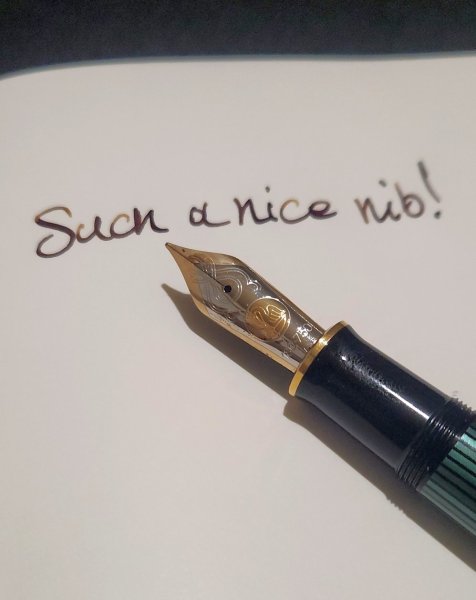
At the risk of sounding stupid, where does the ink come out? Is there not a picture of the nib or what ever?

Violence is the last refuge of the incompetent.

Isaac Asimov, Salvor Hardin in "Foundation"

US science fiction novelist & scholar (1920 - 1992)


There is probably no more terrible instant of enlightenment than the one in which you discover your father is a man--with human flesh.

Frank Herbert, Dune

US science fiction novelist (1920 - 1986)


My Pens on Flikr

Link to comment
Share on other sites

As Vader said, "Impressive, most impressive."


Duncan MacKinnon's early stylographic pen from Canadian patent #4809 from 1875, his first patent. This precedes his first American patent of #174965 issued in March 21, 1876.


Here MacKinnon uses what will become the standard ink flow control method for stylos, a weighted needle, what he calls his "gravitating valve". He will, unfortunately, stray from this simple but effective solution.


This early model has a writing point with tipping material. The needle in these early pens, however, isn't tipped (although it will be in later models). At this time, tipping a stylo is still difficult and costly. Early attempts involve trying to drill a hole through a tiny ball of iridium, a costly and error prone endeavor. It'll take a couple of more years before John Holland's breakthrough for stylographic tipping to become more cost efficient.


The cap at the back is vented for air flow. When unscrewed, air flows from the cap vent through a tube down the middle of the barrel and ends at the section, near the top of the weighted needle. Later, the cap itself will not be vented but will be unscrewed to open access to the vent underneath it.


These early models also have what we would nowadays call an ink shut-off mechanism. A rod extends down the middle of the air tube to just above the weighted needle. When the cap is screwed down, the rod holds the weight against a seal inside the section, shutting off ink flow.


Subsequent models would abandon this ink shut off rod. Other methods would be used to keep the needle assembly in place (screwed-in or back-stopped with a plug) and/or the needle extended (the dreaded spring and its legal entanglements).


You'll note that the cap or "point protector" is very small. These early models don't allow for posting of this cap, which obviously can get lost very easily. Drop that on a rug and see if you can find it. Later models will add a post at the back for the cap.


This type of small point protector form factor will be copied by most other stylo makers of the time. By the early to mid 1880's, this form factor will be replaced by the more familiar straight cap design.


By the early 1880s, MacKinnon, having lost his lawsuit with Cross, is dead. Francis C Brown and Alexander M Sutherland takeover the company and quickly sell it (and are themselves sued for breach of contract on the sale soon thereafter); making for a rough and tumble time for all.


Link to comment
Share on other sites

COOL and yes, expensive.


At the risk of sounding stupid, where does the ink come out? Is there not a picture of the nib or what ever?

There should be a Rapidograph-like point (the stylograph) at the rastremated part, just below the little cap.

Filling obviously by eyedropper, unscrewing the rastremated part I guess...

Arnaldo

_________________________________________________________

Link to comment
Share on other sites

Create an account or sign in to comment

You need to be a member in order to leave a comment

Create an account

Sign up for a new account in our community. It's easy!

Register a new account

Sign in

Already have an account? Sign in here.

Sign In Now


  • Most Contributions

    1. amberleadavis
      amberleadavis
      43972
    2. PAKMAN
      PAKMAN
      35332
    3. inkstainedruth
      inkstainedruth
      30406
    4. Ghost Plane
      Ghost Plane
      28220
    5. Bo Bo Olson
      Bo Bo Olson
      27744
  • Upcoming Events

  • Blog Comments

    • inkstainedruth
      Thanks for the info (I only used B&W film and learned to process that).   Boy -- the stuff I learn here!  Just continually astounded at the depth and breadth of knowledge in this community! Ruth Morrisson aka inkstainedruth 
    • Ceilidh
    • Ceilidh
      >Well, I knew people who were photography majors in college, and I'm pretty sure that at least some of them were doing photos in color,<   I'm sure they were, and my answer assumes that. It just wasn't likely to have been Kodachrome.  It would have been the films I referred to as "other color films." (Kodachrome is not a generic term for color film. It is a specific film that produces transparencies, or slides, by a process not used for any other film. There are other color trans
    • inkstainedruth
      @Ceilidh -- Well, I knew people who were photography majors in college, and I'm pretty sure that at least some of them were doing photos in color, not just B&W like I learned to process.  Whether they were doing the processing of the film themselves in one of the darkrooms, or sending their stuff out to be processed commercially?  That I don't actually know, but had always assumed that they were processing their own film. Ruth Morrisson aka inkstainedruth   ETA: And of course
    • jmccarty3
      Kodachrome 25 was the most accurate film for clinical photography and was used by dermatologists everywhere. I got magnificent results with a Nikon F2 and a MicroNikkor 60 mm lens, using a manually calibrated small flash on a bracket. I wish there were a filter called "Kodachrome 25 color balance" on my iPhone camera.
  • Chatbox

    You don't have permission to chat.
    Load More
  • Files


×
×
  • Create New...